
Last updated: June 24, 2026
The best cat art for home decor should feel like a natural part of the room, not like a random cat-themed accessory added afterward.
Start with one meaningful anchor piece, such as a custom portrait of your own cat. Match the art medium to its location, choose a size that relates to nearby furniture, and repeat one or two colors from the artwork elsewhere in the room. One carefully chosen portrait or coordinated gallery wall usually looks more polished than filling every surface with unrelated cat decorations.
What Counts as Cat Art for Home Decor?
Cat art includes much more than cartoon posters and novelty signs. It can be a hand-painted portrait, a dimensional wool-felt sculpture, a photograph, an abstract silhouette, a vintage illustration, a ceramic figure, or a memorial piece created from a photo of a specific cat.
Good cat art should have a clear role in the room. It may:
- Create a focal point above a sofa, console, desk, or headboard.
- Preserve the appearance and personality of a beloved cat.
- Add warmth, humor, texture, or color to a neutral space.
- Connect a pet-friendly area with the rest of the home's design.
- Create a thoughtful memorial without making the room feel overly formal.
Generic cat prints can work well when their colors and style complement the room. Custom cat art adds a more personal layer because the subject is not simply a cat. It is your cat, with a recognizable ear shape, eye color, coat pattern, expression, and posture.
A useful decorating test: Imagine the same artwork without the cat. Would its colors, texture, frame, and overall mood still belong in the room? When the answer is yes, the art is much less likely to feel like a novelty item.
How to Choose Cat Art That Fits Your Home
It is easy to shop for cat decor based only on cuteness. That often results in several small items competing for attention. A better approach is to make four decisions before choosing the artwork.
-
Decide what the artwork should do.
Determine whether it will be the room's main focal point, a quiet personal detail, a memorial, a conversation starter, or part of a gallery wall. -
Choose the location before the medium.
A narrow hallway, sunny living room, bedside table, and home office each have different requirements for scale, glare, moisture, and viewing distance. -
Match the emotional tone.
A playful kitchen print can be bright and humorous. A memorial portrait usually works better with a calm background, restrained frame, and fewer surrounding objects. -
Set a visual limit.
Decide whether the room needs one cat-themed focal point, a coordinated pair, or one planned gallery wall.
The One-Anchor Rule
For most living rooms, bedrooms, and offices, begin with one anchor piece. This could be a custom portrait, a large illustration, or framed dimensional art. Add smaller supporting pieces only after the anchor is in place.
Cat Art Styles and Where They Work Best
| Art Type | Visual Effect | Best Locations | Best For | Main Consideration |
|---|---|---|---|---|
| Custom framed portrait | Personal, polished, and easy to coordinate | Living room, bedroom, entryway, or office | Everyday display, gifts, and memorials | The frame and background should relate to the room |
| 3D wool-felt portrait | Soft, dimensional, and highly detailed | Office, reading nook, shelf, or protected wall | Showing fur texture and facial expression | Keep away from moisture, direct sun, and curious paws |
| Hand-painted glass art | Clean, detailed, and contemporary | Console wall, bedroom, office, or display shelf | A refined portrait with a finished appearance | Position carefully to reduce glare |
| Full-body sculpture | Lifelike and visually distinctive | Display cabinet, deep shelf, or memorial nook | Capturing posture, tail shape, and body markings | Requires more protected space than flat wall art |
| Minimalist line drawing | Quiet, modern, and airy | Hallway, bedroom, apartment, or office | Subtle cat decor without visual clutter | May feel generic unless it includes a recognizable pose |
| Colorful illustration | Playful and energetic | Kitchen, studio, game room, or children's room | Bold personalities and humorous concepts | Repeat one artwork color elsewhere in the room |
| Black-and-white photography | Calm, editorial, and timeless | Hallway, office, stair wall, or monochrome room | Strong expressions and dramatic lighting | Dark-coated cats need clear facial detail |
| Vintage or folk-style art | Warm, nostalgic, and collected | Library, dining nook, cottage room, or gallery wall | Layered and antique-inspired interiors | Avoid surrounding it with too many novelty objects |
Room-by-Room Cat Art Placement Guide
The same cat portrait can feel elegant in one location and awkward in another. Consider viewing distance, furniture size, natural light, and daily activity before selecting a piece.
| Room or Area | Best Format | Recommended Approach | What to Avoid |
|---|---|---|---|
| Living room | Framed portrait, large painting, or coordinated pair | Use one strong anchor above a sofa or console. Repeat colors from the rug, wood, pillows, or upholstery. | Several tiny signs scattered across unrelated walls |
| Entryway | Framed portrait or vertical glass artwork | Choose a piece that can be understood quickly as people enter. | Fragile freestanding art near keys, bags, or a busy doorway |
| Bedroom | Soft portrait, wool-felt art, or monochrome photo | Favor calm backgrounds, muted colors, and warm frame materials. | A visually noisy gallery wall directly above the bed |
| Home office | Small portrait, framed felt art, or photo pair | Place it where it improves the desk view or video-call background. | Reflective glass directly opposite a bright window |
| Hallway | Portrait series or narrow framed photographs | Create a consistent line using matching frames or equal spacing. | Deep artwork that projects into a narrow walkway |
| Reading nook | Small custom portrait or one tactile 3D piece | Combine it with books, a lamp, and natural materials. | Too many small objects competing on the same shelf |
| Kitchen or breakfast area | Playful print or easy-to-clean framed piece | Use color and humor, but keep art away from heat and steam. | Unprotected wool or paper artwork near the sink or stove |
| Memorial area | Custom portrait, felt artwork, or small sculpture | Use one main portrait with a collar, tag, urn, or favorite photo. | Overfilling the area with text signs and unrelated decor |
A Practical Two-Zone Plan
You do not need cat art in every room. Choose one primary area, such as the living room, office, or bedroom, and one secondary area, such as a hallway or shelf. This makes your love of cats visible without turning the entire home into a themed space.
How to Choose the Right Size and Hanging Height
Artwork often looks wrong because of scale rather than style. A beautiful cat portrait may disappear on a wide wall when it is too small, while a large, heavily framed piece can overwhelm a narrow console.
Use the Furniture as Your Starting Point
When placing cat art above a sofa, bed, console, or desk, connect the artwork visually to the furniture beneath it. A useful starting point is for the artwork or complete gallery grouping to occupy roughly two-thirds of the furniture width.
For example, a 72-inch sofa will usually look more balanced with an artwork grouping approximately 44 to 50 inches wide than with a single small frame floating in the center.
Use Eye Level on an Open Wall
For a standalone piece on an open wall, begin by positioning the center of the artwork approximately 57 to 60 inches from the floor. In rooms where people are usually seated, the art may look better slightly lower.
| Placement | Starting Point | Adjustment | Source |
|---|---|---|---|
| Open hallway or empty wall | Center artwork around 57 to 60 inches from the floor | Adjust for household height and viewing position | Artwork hanging guideline |
| Above a sofa or console | Keep the lower edge visually connected to the furniture | Test a gap of approximately 6 to 10 inches with paper templates | Architectural Digest hanging guide |
| Gallery wall | Treat the complete grouping as one large artwork | Measure the outer edge of the arrangement | Wall art arrangement guide |
| Desk or shelf | Leave enough open surface around the artwork | Keep it behind the cat's normal reach | Pet portrait guide |
Test the Size Before Ordering
- Measure the available wall, shelf, or furniture width.
- Use painter's tape or paper to mark the planned artwork size.
- View the outline from the room entrance and normal seating area.
- Photograph the test area with your phone.
- Choose a size that remains visible without overwhelming nearby furniture.
Do not judge size while standing directly in front of the wall. Step back to the distance from which the artwork will normally be viewed.
PetDecorArt Cat Art Recommendations
PetDecorArt offers several custom formats created from a photograph of your cat. The best choice depends on whether you want wall art, tactile texture, full-body realism, or a finished frame that is ready to display.
Product options and prices may change. Check the linked official product page before ordering.
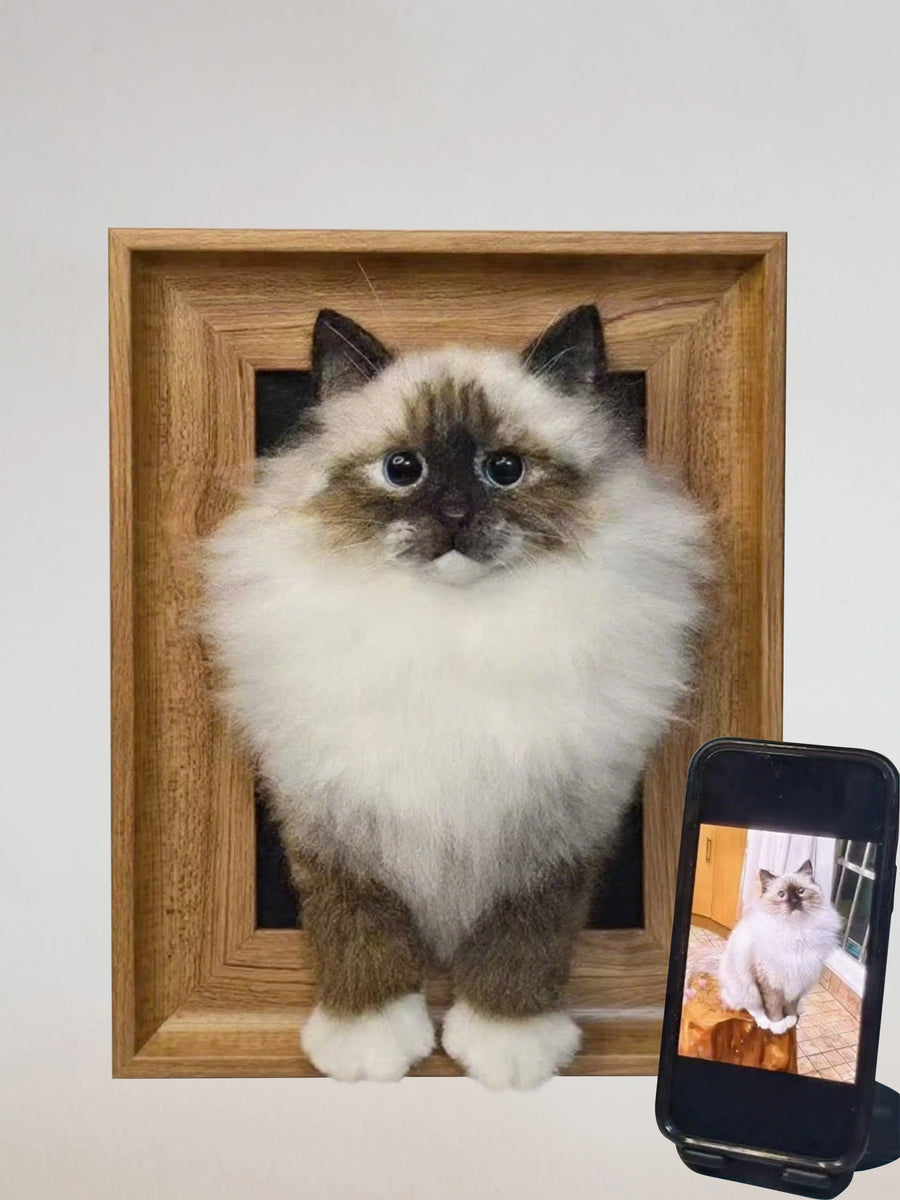
Best Textured Wall Art: Framed 3D Wool-Felt Cat Portrait
This format is a strong choice for cat owners who want visible fur texture and facial depth instead of a completely flat image. The portrait extends visually from the frame, creating a noticeable focal point without requiring a large wall.
- Listed starting price: $249.99
- Material: Handmade wool felt
- Portrait options: Head or half-body design
- Frame sizes: 6, 7, 8, 10, 12, and 16 inches
- Customization: Created from customer-supplied pet photos
- Production time: Commonly listed as approximately 2 to 4 weeks, depending on complexity and order volume
Best locations: Bedroom, office, memorial area, reading corner, or protected living-room wall.
Choose it when: Your cat's eyes, muzzle, chest fur, ears, and expression are the most important details.
View the Framed Wool-Felt Portrait
Best Ready-to-Display Portrait: Framed Oil Painting on Glass
This option works well when you want a finished custom portrait that can immediately become part of the room. The supplied frame makes it easier to coordinate the artwork with a wall, console, desk, or shelf.
- Listed price range: $169.99 to $399.99
- Medium: Hand-painted artwork on glass
- Presentation: Supplied with a frame
- Available sizes: Approximately 4 × 6 inches to 8 × 12 inches
- Customization: Size, pose, and multi-pet options may be available
- Production time: Commonly listed as approximately 2 to 4 weeks, depending on complexity and order volume
Best locations: Entryway, office, living-room console, bedroom, or memorial display.
Choose it when: You want a recognizable portrait with a traditional framed-art appearance.
View the Framed Oil Painting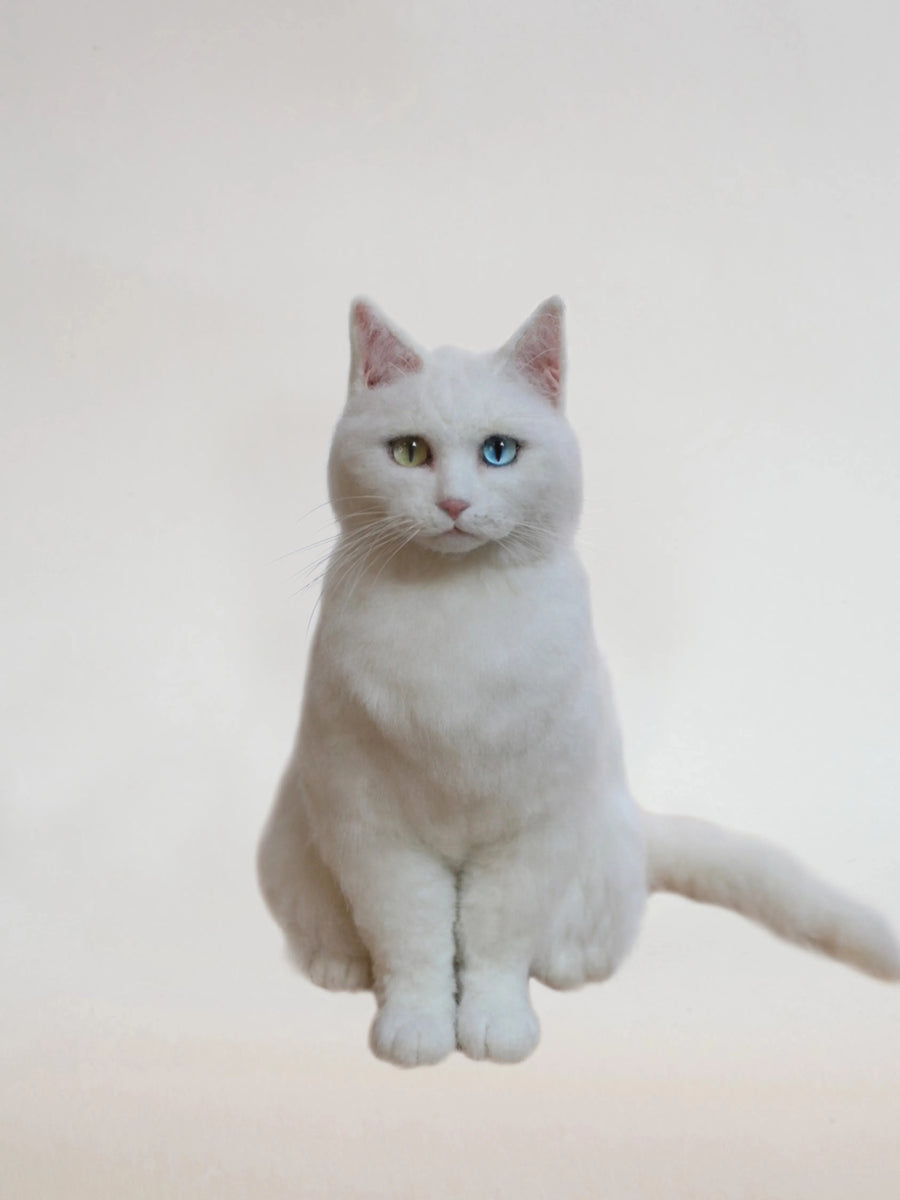
Best Statement Keepsake: Full-Body Wool-Felt Cat Portrait
A full-body piece captures details that a face portrait cannot, including the cat's sitting position, leg markings, body proportions, tail shape, and familiar posture. It functions more like a small sculpture than conventional wall art.
- Listed price range: $499.99 to $1,999.99
- Material: Handmade needle-felted wool
- Size range: Approximately 6 to 16 inches
- Design: Complete full-body portrait based on customer photos
- Production time: Commonly listed as approximately 2 to 4 weeks, depending on complexity and order volume
Best locations: Display cabinet, deep bookshelf, memorial area, private office, or protected console.
Choose it when: Your cat's posture and full-body markings are central to how you remember them.
View the Full-Body PortraitPetDecorArt Cat Art Comparison
| Product | Listed Price | Size Options | Best Display | Best Feature | Official Page |
|---|---|---|---|---|---|
| Framed 3D wool-felt portrait | From $249.99 | 6 to 16-inch frame options | Wall, desk, or protected shelf | Dimensional fur and facial detail | View product |
| Framed oil painting on glass | $169.99 to $399.99 | Approximately 4 × 6 to 8 × 12 inches | Wall, console, desk, or shelf | Frame included and ready-to-display appearance | View product |
| Oil painting on glass | $199.99 to $429.99 | Approximately 4 × 6 to 8 × 12 inches | Modern wall or shelf display | Detailed painted effect on glass | View product |
| Full-body wool-felt portrait | $499.99 to $1,999.99 | Approximately 6 to 16 inches | Cabinet, deep shelf, or memorial area | Captures complete posture and markings | View product |
How to Choose a Photo for Custom Cat Art
A custom portrait can only reproduce details that are visible in the reference photographs. The best photo is not always the most dramatic image. It is the photo that clearly shows the features you want the artist to preserve.
The Best Reference Photo Set
- One sharp front-facing photo with both eyes visible.
- One side or three-quarter view showing the nose, ears, and head shape.
- One full-body image showing posture, tail, leg, and paw markings.
- One close-up showing eye color and unusual facial markings.
- One personality photo showing a familiar expression or pose.
| Photo Detail | What Works | What Creates Problems | Why It Matters |
|---|---|---|---|
| Lighting | Soft natural light near a window | Flash glare, colored lamps, or strong backlighting | Preserves accurate eye and coat color |
| Focus | Sharp eyes, nose, and whisker area | Motion blur or heavy digital zoom | The eyes usually carry the portrait's emotional focus |
| Angle | Camera positioned near the cat's eye level | Extreme top-down or close wide-angle images | Prevents distorted ears, muzzle, and body proportions |
| Cropping | Full head, ears, and relevant body parts remain visible | Cropped ears, paws, or tail | Missing details force the artist to estimate |
| Coat detail | Fur direction and markings remain visible | Heavy filters or crushed shadows | Important for tabby stripes and tuxedo markings |
| Background | Simple enough to separate the cat's outline | Clutter or furniture that matches the coat color | Clear edges help define the ears, body, and tail |
Black cats require extra attention because phone cameras can turn the coat into a single dark shape. Use indirect daylight and make sure the edges of the ears, nose, whiskers, eyes, and chest remain visible. See the PetDecorArt guide to photographing black cats for more practical advice.
For kittens, include photographs that preserve temporary features such as oversized ears, round cheeks, small paws, and fluffy kitten fur. The kitten art guide explains how different formats capture this short stage of life.
How to Match Cat Art to Your Interior Style
You do not need to match every color exactly. Instead, create one clear connection between the artwork and the room through its frame material, dominant background color, texture, or overall mood.
| Interior Style | Recommended Cat Art | Frame or Display | Color Strategy |
|---|---|---|---|
| Minimalist | One custom portrait, line drawing, or monochrome photo | Thin black, white, or light-wood frame | Use a quiet background and open wall space |
| Scandinavian | Soft illustration, felt portrait, or neutral photograph | Light oak or natural wood | Cream, warm gray, muted blue, and soft brown |
| Modern | Glass artwork, bold crop, or graphic portrait | Black frame or clean glass presentation | High contrast with one controlled accent color |
| Traditional | Hand-painted portrait or formal seated pose | Medium or dark wood frame | Warm neutrals, navy, green, burgundy, or antique gold |
| Bohemian | Folk art, colorful illustration, or mixed-media portrait | Carved wood or layered shelf display | Repeat colors already found in rugs and textiles |
| Farmhouse or cottage | Watercolor, vintage painting, or wool-felt portrait | Natural or warm distressed wood | Cream, dusty blue, green, brown, and soft black |
| Eclectic | Colorful custom art or mixed gallery wall | Mixed frames with one repeated finish | Choose two or three recurring colors |
| Industrial | Monochrome portrait, silhouette, or glass art | Black metal or dark wood | Charcoal, rust, concrete gray, and leather tones |
Use the Cat's Natural Colors
Your cat's coat can help connect the portrait to the room. An orange tabby portrait often works naturally with terracotta, warm wood, camel leather, and olive green. A gray cat fits well with charcoal, dusty blue, stone, and silver. A tuxedo or black cat can create a strong graphic focal point in a light neutral room.
You do not need to redesign the room around the cat's coat. Repeating one related color in a pillow, vase, throw, book, or decorative object is usually enough.
How to Build a Cat Gallery Wall Without Making It Look Cluttered
A successful cat gallery wall should tell one clear story. The artwork can vary in size and medium, but the pieces need at least one shared visual rule.
Choose One Unifying Element
- The same frame color.
- A consistent mat color.
- One repeated accent color.
- Only photographs or only handmade artwork.
- One cat shown at different life stages.
- Several cats portrayed against similar backgrounds.
A Simple Three-Piece Layout
- Use one larger central portrait as the anchor.
- Add one smaller image showing a full-body pose.
- Add one detail image showing paws, whiskers, a collar, or a favorite sleeping position.
This creates more variety than using three nearly identical face portraits and tells a more complete story about the cat.
Gallery Walls for Multiple Cats
Give each cat similar visual importance. Use the same frame size, background style, or portrait medium. When one portrait is significantly larger than the others, viewers may interpret it as a deliberate hierarchy.
Plan before drilling: Trace each frame onto paper and tape the templates to the wall. Check the arrangement from the room entrance, normal seating area, and nearby hallway before installing it.
How to Display Cat Art Safely in a Cat Household
Cat art is often displayed in the same home as an active climber, shelf explorer, or curious kitten. The display should be designed for the cat that actually lives in the house.
- Use wall hardware rated for the artwork's weight and wall material.
- Add frame bumpers so wall art does not swing when bumped.
- Avoid leaning heavy glass frames on narrow, accessible shelves.
- Keep wool-felt artwork away from scratching and climbing areas.
- Place freestanding sculptures inside a cabinet or on a deep shelf.
- Do not position fragile art directly above a cat tree or jumping route.
- Keep loose cords, wire, ribbons, and tassels out of reach.
- Use a closed display box for small memorial items such as fur, whiskers, or tags.
Observe Your Cat's Normal Route
A shelf may appear high and safe but could be only one jump away from a sofa arm, windowsill, or side table. The safest display areas are usually walls without nearby launching surfaces, enclosed cabinets, and shelves that are not already part of the cat's route.
Cleaning and Care by Art Medium
| Medium | Routine Care | Avoid | Best Environment |
|---|---|---|---|
| Framed wool-felt portrait | Use a very soft, dry brush to remove surface dust | Water, spray cleaners, rubbing, or pulling fibers | Dry room with indirect light |
| Full-body wool-felt sculpture | Support the base when moving and dust gently | Holding it by the ears, legs, tail, or small details | Enclosed cabinet or stable deep shelf |
| Glass artwork | Dust the exterior using a clean microfiber cloth | Spraying cleaner directly onto the frame or artwork | Low-glare area away from direct heat |
| Framed print or photograph | Dust the frame and inspect hanging hardware periodically | Direct sun, humidity, and damp exterior walls | Interior wall with stable conditions |
| Canvas art | Use a clean, dry, soft cloth or brush | Cleaning sprays or pressure on the canvas surface | Dry room away from cooking residue |
| Ceramic or clay art | Lift from the base and dust using a soft cloth | Shelf edges, unstable books, and frequent handling | Stable shelf or closed cabinet |
Direct sunlight can change colors and damage delicate materials over time. Before selecting a permanent position, observe the wall during the morning, afternoon, and evening.
How Much Cat Art Does One Room Need?
| Room Size or Type | Good Starting Point | Why It Works |
|---|---|---|
| Small room or apartment | One medium portrait or two coordinated small pieces | Adds personality without using every available wall |
| Average living room | One large anchor or one three-to-five-piece grouping | Creates a focal point related to the main furniture |
| Home office | One desk piece and one wall portrait | Adds personality from both seated and camera-view angles |
| Hallway or stair wall | A consistent series with repeated frames | The longer wall supports multiple related images |
| Dedicated pet room | Several pieces organized around one palette or theme | A stronger theme suits a purpose-built pet space |
Adding more pieces does not automatically create more personality. One custom portrait that captures a familiar expression may say more than ten generic cat signs.
Common Cat Art Decorating Mistakes
Buying Before Choosing the Location
A piece may be beautiful but unsuitable for the only available wall. Measure the area before choosing the format and size.
Using Artwork That Is Too Small
Small art often looks unfinished above wide furniture. Group coordinated pieces together or select one larger anchor.
Hanging Everything Too High
Cat portraits should feel connected to the room rather than floating near the ceiling. Test the position with a paper template.
Mixing Too Many Styles
A realistic painting, cartoon sign, metal silhouette, watercolor, and memorial plaque may all be attractive individually. Placing them together without a shared color, theme, or frame treatment creates visual confusion.
Matching the Art Too Literally
The artwork does not need to contain the exact shade of the sofa. A connection through warmth, contrast, texture, frame material, or mood is enough.
Choosing a Poor Reference Photo
A blurry, heavily filtered, or strongly shadowed photo limits the artist's ability to reproduce eye color, fur texture, and coat markings accurately.
Ignoring Reflections
Glass artwork positioned opposite a window may reflect the room more strongly than it displays the portrait.
Leaving Fragile Art Within Jumping Distance
A narrow shelf beside a sofa, window, or cat tree may become part of your cat's normal route. Use secure wall mounting or an enclosed display.
Overfilling a Memorial Area
A memorial is often more meaningful when one portrait, one personal object, and a small amount of open space are allowed to carry the story.
Turning Every Surface Into a Cat Theme
Cat art feels more special when it is curated. Let the rest of the room include books, plants, textiles, family photographs, and travel objects.
Cat Art Buying Checklist
- Where will the finished artwork be displayed?
- What are the maximum wall, shelf, or frame dimensions?
- Will it be viewed from nearby or across the room?
- Does the location receive direct sunlight?
- Can your cat reach the artwork from nearby furniture?
- Do you want the face, half body, or full-body posture captured?
- Are the reference photos sharp enough to show the eyes and coat markings?
- Does the frame or material relate to the existing room?
- Are revisions or final approval included?
- Does the production schedule work for the intended gift date?
- Have you checked the current price and options on the official product page?
Frequently Asked Questions About Cat Art for Home Decor
What type of cat art looks best in a living room?
A framed custom portrait, hand-painted piece, or coordinated gallery grouping usually works best. Choose a size that relates to the sofa or console and repeat one color or material from the artwork elsewhere in the room.
How do I decorate with cat art without making my home look kitschy?
Use one strong cat-themed focal point instead of many small novelty items. Choose artwork based on its color, composition, frame, and material rather than cuteness alone.
Is custom cat art better than a generic cat print?
Custom art is better when emotional value, recognizable markings, or a specific memory matters. Generic prints are useful when the main goal is affordable color, humor, or a decorative theme.
Where should I put a custom cat portrait?
Good locations include above a console, beside a desk, in a bedroom, along a hallway, or inside a memorial area. Choose a location with indirect light and limited risk from climbing cats.
How high should cat wall art be hung?
On an open wall, begin with the artwork's center approximately 57 to 60 inches from the floor. Above furniture, keep the portrait visually connected to the sofa, console, desk, or headboard.
What size cat art should go above a sofa?
A useful starting point is for the artwork or complete gallery grouping to span approximately two-thirds of the sofa width. Test the size using painter's tape before ordering.
What is the best cat art for a small apartment?
Choose one medium framed portrait, one vertical piece, or two coordinated small works. A framed dimensional portrait can add texture without requiring extra floor space.
What cat art works with modern decor?
Glass paintings, high-contrast portraits, monochrome photography, and artwork in simple frames fit modern interiors well.
Can a custom portrait be created from several cat photos?
Yes. Multiple reference photos can show accurate eye color, ear shape, coat markings, posture, and personality. Include a face photo, side angle, and full-body photo when possible.
What photo is best for custom cat art?
Use a sharp, naturally lit photograph taken close to the cat's eye level. The ears should be visible, the eyes should be in focus, and filters should not alter the coat color.
How should I display cat art in a home with an active kitten?
Use secure wall mounting, keep fragile pieces away from launch points, and place freestanding sculptures inside cabinets or on deep shelves.
Is wool-felt cat art suitable for wall display?
Yes. A framed wool-felt portrait adds texture while using less shelf space than a full-body sculpture. Display it in a dry location away from direct sunlight and curious paws.
Is glass cat art difficult to display?
Glass artwork can look clean and refined, but placement matters. Avoid positioning it directly opposite bright windows and check reflections throughout the day.
How many cat portraits can I put in one room?
Most rooms look balanced with one anchor portrait or one coordinated gallery grouping. More pieces can work in a hallway or dedicated pet room when the frames and colors remain consistent.
How do I create a cat memorial corner at home?
Start with one custom portrait. Add one or two personal objects, such as a collar, name tag, urn, favorite photograph, or small toy. Leave open space around the display.
Turn Your Favorite Cat Photo Into Home Art
Begin with the room rather than the product. Measure the display area, decide what feeling the artwork should create, and collect several clear photographs of your cat. Then compare wall-ready paintings, dimensional framed portraits, and full-body keepsakes based on the space available.
View Custom Cat Portrait Options Shop PetDecorArt Products Get Help Choosing an Art Style


