

Black pets are beautiful in person and frustrating on camera. The usual problems are easy to spot: the fur turns into one dark shape, the eyes disappear, the background swallows the outline, or the camera “fixes” the exposure so aggressively that your black pet suddenly looks charcoal gray.
This guide is built for regular pet owners, not studio photographers. It focuses on what actually works at home, outside on walks, and with a phone in your hand. It also covers the part many photo guides skip: how to choose the kind of photo that works best if you want to turn that image into custom wall art, embroidery, or a keepsake later.
You do not need expensive gear. You do need better light, cleaner backgrounds, a little more patience, and a smarter way to judge whether the photo is actually usable before you move on.
The short answer
If you want better photos of a black dog or black cat, put light on the face first, use a clean mid-tone background, focus on the eyes, and avoid harsh midday sun or dim yellow room lighting. For still portraits, a fast-enough shutter and soft light matter more than fancy equipment. For moving pets, use even more light and a faster shutter. If you are shooting for custom art, the best photo is usually the one where the pet’s eyes are sharp, the fur edge is clearly separated from the background, and the coat still looks naturally black instead of washed out gray.

Why black pets are harder to photograph
Most cameras and phones are trying to average the whole scene. That is fine when your subject has lots of mid-tones. It is less helpful when your dog or cat is mostly deep black fur. The camera often lifts exposure too far, drops detail into shadow, or gets confused by bright windows, snow, sidewalks, or light-colored walls.
There is also a second issue that people underestimate: dark fur shows bad light very quickly. A weak overhead bulb can flatten the coat. Hard sun can create shiny patches and deep eye sockets. A dark couch or dark bushes can erase your pet’s outline. None of that means black pets are “hard to photograph” in some permanent way. It usually means the scene is doing them no favors.
| Common problem | What you see in the photo | Why it happens | Fast fix |
|---|---|---|---|
| Crushed fur detail | The body looks like one dark blob | Not enough light on the face and coat | Move closer to window light or open shade |
| Gray-looking black coat | The pet no longer looks truly black | Camera or editor lifted shadows too much | Lower exposure slightly and protect coat color |
| No sparkle in the eyes | The expression feels flat or tired | No catchlight from window, sky, or soft light source | Turn the face toward light, not away from it |
| Pet blends into background | Outline disappears | Dark subject placed on dark furniture, grass, or shadows | Use a mid-tone or lighter background |
| Blur from movement | Eyes and nose look soft | Shutter too slow for a moving dog or restless cat | Use burst mode and raise shutter speed |
The light setups that work best
The easiest upgrade is not a new camera. It is better light placement. For black pets, soft light from the front or slightly from the side usually beats dramatic backlight, dim rooms, and direct overhead sun.
Best indoor setup
Put your pet near a large window with bright indirect light. Turn their face toward the window. Stand so the window light falls across the eyes and front of the muzzle. If the sun is blasting directly through the glass, step back a little or use a sheer curtain so the light stays soft.
Best outdoor setup
Open shade is your friend. Think porch shade, the shaded side of a house, or light shade near the edge of trees. You want a bright environment without harsh sunlight punching shiny spots into the coat. Early morning and late afternoon are also safer than strong midday sun.
| Situation | What to do | What to avoid | Why it works | Source |
|---|---|---|---|---|
| Indoor portrait | Use bright window light and angle the pet toward it | Ceiling lights only or a dark corner of the room | Gives the eyes shape and lifts coat detail without harsh contrast | AKC, Cat Care Society |
| Outdoor still portrait | Choose open shade or softer light later in the day | Harsh noon sun on dark fur | Reduces blown highlights and deep eye shadows | Canon |
| Black cat on furniture | Move to a mid-tone blanket, wood chair, or light rug | Black couch, dark bedspread, dark tunnel cat tree | Helps the outline read clearly | Cat Care Society |
| Excited dog outdoors | Face the dog toward the brighter part of the sky and shoot bursts | Shooting into a bright background with the face in shadow | You keep expression in the face instead of a silhouette | Canon |
| Using autofocus | Prioritize eye or animal detection when available | Letting focus land on chest fur or background | Sharp eyes make dark-fur portraits feel alive | Nikon |
A practical rule: if you cannot clearly see the pet’s eyes with your own eyes before you take the photo, the camera will almost never improve the situation for you.
Best starter settings for phones and cameras
You do not need perfect technical settings to get a good black-pet portrait, but you do need a good starting point. The goal is simple: keep the eyes sharp, protect the black coat from turning muddy, and use enough light to avoid blur.
| Type of shot | Starter settings | Why it works | Source |
|---|---|---|---|
| Still dog or cat portrait | Start around 1/200 sec, wide aperture such as f/2.8 or f/1.8 if available, lowest practical ISO | Fast enough for small movements while keeping soft background blur | Canon |
| Action or playful movement | Start at 1/1000 sec or faster, middle aperture like f/5.6 to f/8, raise ISO as needed | Freezes jumps, head turns, and quick paw movement better | Canon |
| Mirrorless or DSLR focusing | Use animal eye AF or eye-detection AF when your camera offers it | Helps lock onto the eye instead of dark fur or background | Nikon |
| Phone portrait mode | Tap the eye area, reduce exposure slightly if the coat turns gray, shoot several frames | Phones often brighten dark scenes too much, so a small exposure pull-back helps | Practical shooting workflow based on the same light and eye-priority principles above |
| Editing later | Lift shadows gently, then stop before the coat looks faded | Preserves texture without losing true black coat color | Best-practice workflow for keeping realistic dark-fur tone |
Phone-only workflow that works surprisingly well
- Move your pet into bright indirect light.
- Tap the eyes or upper face to focus.
- Drag exposure down slightly if the coat starts looking washed out.
- Take a short burst instead of a single shot.
- Pick the frame with the sharpest eyes, not just the cutest pose.

Black dog photo tips
Black dogs are often easier to place than cats because you can guide their position more directly. The trade-off is motion. Even a calm dog usually gives you tiny head shifts, blinking, tongue movement, or ear changes that can soften the shot if the shutter is too slow.
What works best for black dogs
- Pose the dog facing the light, even if only slightly.
- Keep the background cleaner than you think you need. Bushes, cars, patio clutter, and dark fences fight with the coat.
- Photograph at the dog’s eye level instead of from above whenever possible.
- Use a toy, treat, or sound to get alert ears and a brighter expression.
- Take a loose frame first. You can crop later, but you cannot recover cut-off ears.
| Goal | Best move | Why it matters for black dogs |
|---|---|---|
| Show expression | Light the front of the face and wait for catchlights in the eyes | Dark eyes on dark fur need that tiny spark to read clearly |
| Show coat texture | Use soft side-front light instead of hard overhead sun | Gives shape to the muzzle, chest, and shoulder fur |
| Keep the dog truly black | Do not over-edit shadows or contrast | Too much lifting makes the coat look dusty gray |
| Freeze movement | Use burst mode and faster shutter for active dogs | Small motions are magnified in close-up portraits |
| Avoid disappearing edges | Separate the dog from dark trees, sofas, or bushes | Outline matters more with black fur than with lighter coats |
One of the easiest tricks for black dogs is to stop chasing dramatic scenes. A plain path, pale fence, light stone wall, or muted lawn edge often produces a much stronger portrait than a “pretty” but messy background. The dog should be the subject, not the setting.

Black cat photo tips
Black cats bring a different challenge: they decide where the session happens. That means your best strategy is not forcing poses. It is setting up a good spot and letting the cat settle into it naturally.
What works best for black cats
- Photograph right after a nap or meal if your cat tends to be calmer then.
- Choose a brighter perch near a window instead of pulling the cat into the middle of the room.
- Use a toy or a second person to bring the cat’s gaze toward the light.
- Pay attention to whiskers, ear edges, and chest fur. These small bright details help define the face.
- Take several angles. A shift of only a few inches can completely change how the fur catches light.
| Cat situation | What to do | What to skip | Source |
|---|---|---|---|
| Cat on a windowsill | Keep the face turned toward the window and use the sill as a natural stage | Shooting from the darker side of the room | Cat Care Society |
| Cat on dark furniture | Add a mid-tone throw blanket or move to a wooden chair | Leaving the cat on a black sofa or deep-shadowed bed | Cat Care Society |
| Cat will not hold still | Wait for a pause, then shoot in short bursts | Chasing the cat around the room with one-photo-at-a-time timing | Practical pet-photography workflow |
| Cat looks flat in photos | Prioritize sharp eyes and a visible catchlight | Letting focus land on the nose or shoulder | Nikon |
If your black cat has green, gold, or copper eyes, those eyes are a major advantage. Build the photo around them. When the eyes are sharp and bright, the entire portrait feels more intentional and more alive.
Editing without making black fur look fake
The biggest editing mistake with black pets is treating “more detail” as the only goal. Yes, you want to open the shadows enough to see the fur. No, you do not want to push the coat so far that it stops looking black.
| Edit control | Good move | Too far looks like | Better target |
|---|---|---|---|
| Exposure | Adjust in small steps | Face looks bright but coat loses depth | Eyes readable, coat still clearly black |
| Shadows | Lift just enough to reveal shape | Fur turns flat gray | Muzzle, chest, and ears have texture but still hold contrast |
| Highlights | Reduce shiny spots on nose or forehead if needed | Image starts looking dull everywhere | Keep the catchlight in the eye bright |
| White balance | Neutralize ugly yellow or green indoor casts | Black fur picks up odd color tint | Neutral black with natural warmth where appropriate |
| Background cleanup | Remove distractions and brighten lightly if needed | Subject edge looks cut out | Cleaner scene, believable outline |
A good edited black-pet photo still looks like your pet on a normal day. That is the standard. Not “maximum visible fur.” Not “brightest possible face.” The standard is truth plus clarity.
Photo checklist before ordering custom pet art
If your goal is not just a nice social post but a custom keepsake, the bar changes a little. Artists can work with imperfect photos, but some flaws are much easier to work around than others. Before you upload a photo for art, check these things first.
The photo is strong enough for custom art if…
- The eyes are sharp when you zoom in.
- The face is not hidden by harsh shadow.
- The ears are fully visible or cropped intentionally, not accidentally.
- The coat edge is easy to separate from the background.
- The black fur still looks black, not silvery gray from over-editing.
- Key markings around the muzzle, chest, or paws are visible.
Try again if the photo has any of these issues
| Issue | Why it matters for custom portraits | Better replacement |
|---|---|---|
| One eye hidden in deep shadow | Expression becomes harder to read and less personal | Front-facing or three-quarter angle with even face light |
| Black pet on black background | Important silhouette information is missing | Photo with contrast between pet and surroundings |
| Heavy filters | Artists lose true coat color and facial detail | Original or lightly edited version |
| Screenshot instead of original file | Lower quality and compression artifacts | Original phone image |
| Motion blur around the eyes | The face can feel softer and less lifelike | Short burst frame with the sharpest eye detail |
If you are comparing several options, start with the broad Pet Portraits collection or the more focused Pet Portraits From Photos page. If you want a cat-specific starting point, the Custom Cat Portraits page is a useful shortcut. PetDecorArt’s own collection copy emphasizes eyes, markings, coat texture, and expression, which is exactly why choosing the right source photo matters so much for black pets.
For a step-by-step buying walkthrough, the site’s How to Order a Custom Pet Portrait guide is also worth linking internally from this article.
PetDecorArt picks for your best black-pet photos
The right product depends on what kind of photo you have. A sharp head-and-shoulders photo can work beautifully for embroidery. A more detailed portrait with good lighting across the face and chest tends to work well for framed wall art. If you have extra angle references and want a more dimensional result, a handcrafted felt piece can make sense.
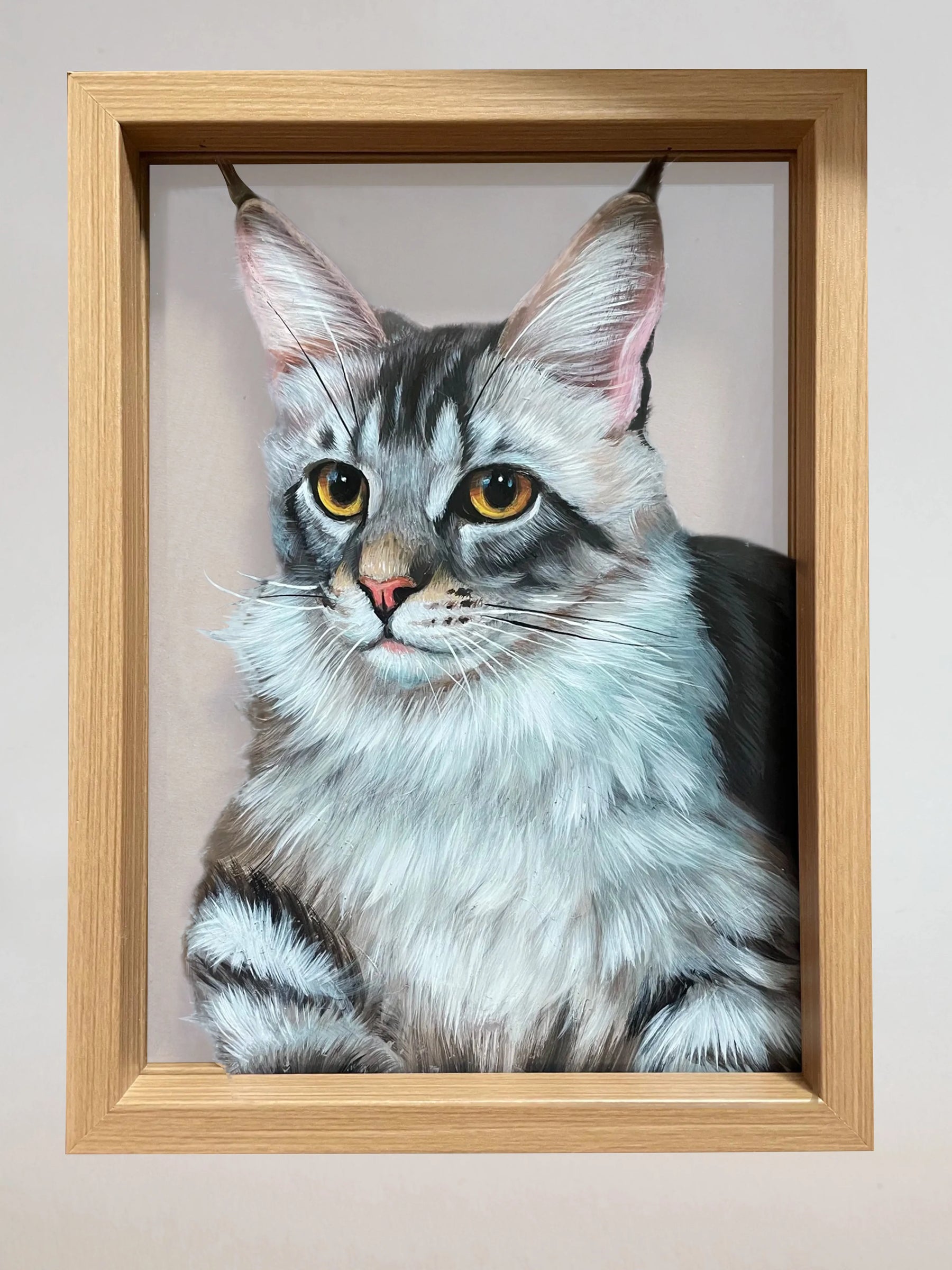
Custom Hand Painted Pet Portraits Oil Paintings With Frames
This is the cleanest wall-art recommendation when you already have one strong portrait photo. It is a good fit for black dogs and black cats because the finished piece can preserve facial structure, eye detail, and chest highlights without needing an overly busy composition. The product page also notes multiple size options and support for adding multiple pets.
Best for: one clear portrait photo with visible eyes, clean face lighting, and enough coat detail to feel personal.

3D Custom Stuffed Animal Clones with Wooden Frame
If your black pet has distinctive ear shape, whiskers, or coat texture that you really want to preserve, this option gives you more dimension than a flat print. The product page highlights handmade wool felt construction, head-only and half-body options, and one-to-one custom service with revisions, which is especially helpful when a dark-coated pet needs careful detail handling.
Best for: people who have a few reference photos and want something more tactile and more sculptural than standard wall art.
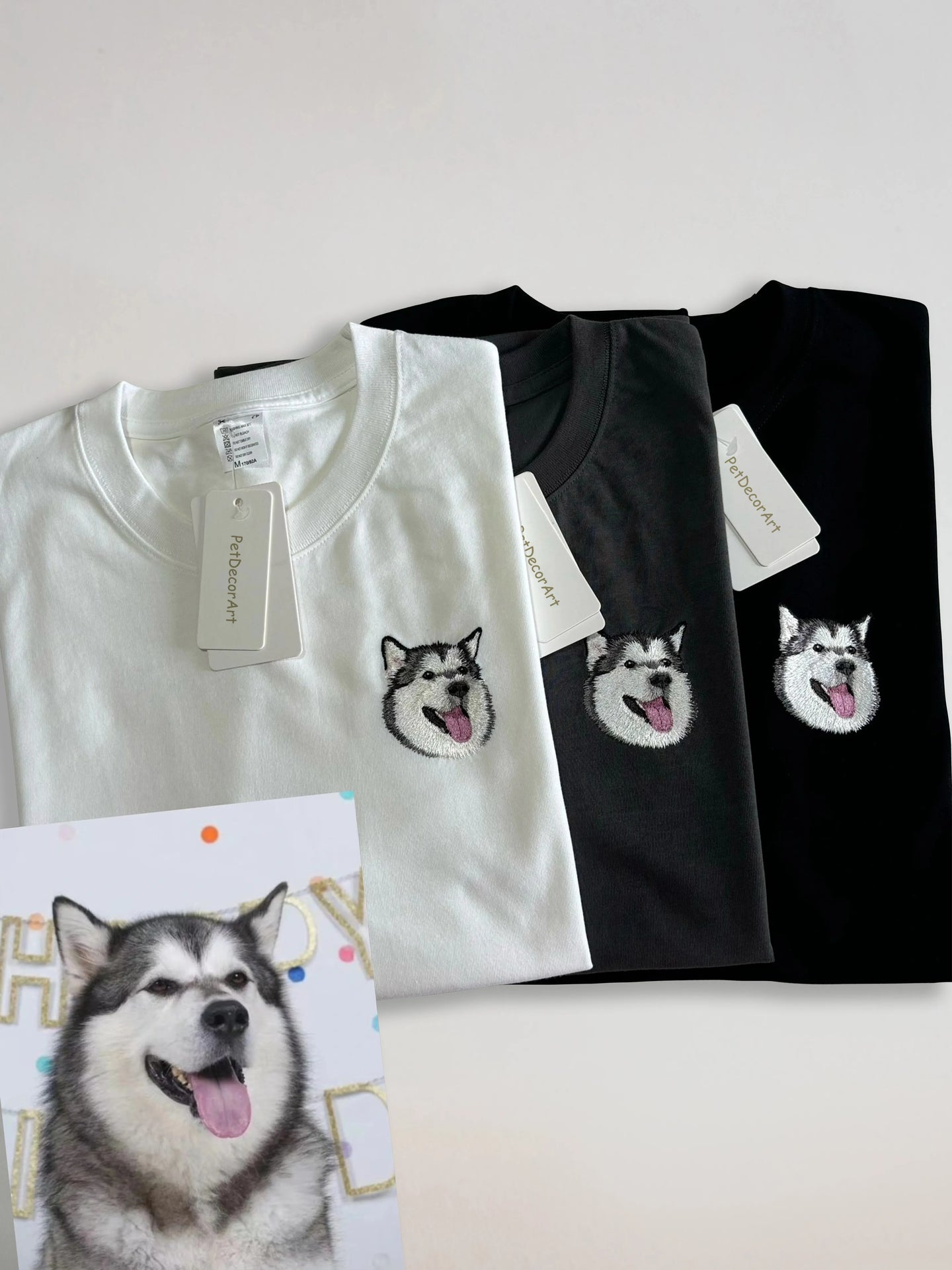
Custom Hand Embroidered Pet Portrait T-Shirt
If your best black-pet photo is a headshot with sharp eyes and a clean face outline, embroidery is an easy recommendation. The product page lists multiple shirt colors and notes that the stitched portrait can be done as a subtle mini head portrait or a larger classic option. This works well for people who want a more casual gift and already have one strong face photo rather than a full-body hero shot.
Best for: one sharp face photo, giftable budget, and a less formal alternative to framed art.

Custom Pet Oil Painting from Photo on Glass
This is the better fit when you want a more statement-making wall piece from a strong portrait photo. The page notes a hand-painted glass surface, a dimensional effect, and customization options including multiple pets. It also states that custom orders generally take about 2–4 weeks and that confirmation photos are provided before shipping.
Best for: a polished close-up image where the face, eyes, and fur pattern are already clear enough to support a more dramatic finished piece.
Internal-link angle that makes sense here: after readers finish the photo guide, send them to Personalized Pet Portraits: How to Choose One That Actually Feels Personal or to the collection pages above, depending on whether they are still researching or ready to shop.
A simple shoot plan you can use today
- Pick one bright place with indirect light.
- Choose a cleaner, lighter, or mid-tone background.
- Position your black dog or black cat so the face turns toward the light.
- Take 10 to 20 frames, not 2 or 3.
- Review for eye sharpness first, outline second, coat detail third.
- Edit lightly so the pet still looks truly black.
- Only then decide whether the image is good enough for printing, gifting, or custom art.
This order matters. Most disappointing pet photos fail before editing even starts. When light and separation are right, the rest gets much easier.
FAQ
Why do black dogs and black cats look like a dark blob in photos?
Usually because there is not enough usable light on the face and coat, or because the pet is blending into a dark background. Better light direction and better background contrast fix this more often than a new camera does.
Should I use flash for black pets?
Most casual pet owners get nicer results without direct flash. Soft window light, open shade, or a diffused light source is usually more flattering. Straight flash can create hard reflections on the nose and flatten the fur.
What is the best background color for a black pet photo?
Mid-tone and lighter backgrounds are usually easiest. Think wood, stone, muted blankets, neutral walls, or lightly blurred greenery. Pure black backgrounds can work, but they are much harder for everyday shooters to manage well.
How do I keep black fur looking black instead of gray?
Do not over-brighten the file. Lift detail carefully, but stop once the coat starts losing depth. A good edit keeps the pet recognizably black while still showing shape in the face and chest.
Are phone photos good enough for custom pet portraits?
Yes, as long as the original photo is sharp, well lit, and not heavily filtered. Many great custom portraits start from phone images. The key is the quality of the light and the clarity of the eyes, not whether the image came from a phone or a dedicated camera.
What is the best angle for a black dog portrait?
Eye level or slightly above eye level is usually the safest. It keeps the dog’s expression strong and avoids the “looking down from standing height” snapshot feel that often flattens the face.
What is the best time of day to photograph a black cat or black dog outside?
Early morning or later afternoon is usually easier than harsh midday sun. Open shade can work at any time if it is bright enough and the pet still has light in the eyes.
What kind of black-pet photo works best for PetDecorArt products?
The best photo is usually one with sharp eyes, visible facial detail, and clear separation from the background. Framed and glass-painted art tend to favor a strong portrait photo, while dimensional felt pieces benefit from having a little more visible structure and, ideally, more than one reference image.
Final takeaway
Black pets do not need gimmicks. They need flattering light, cleaner separation, and a little more care with exposure. Start there and you will already be ahead of most black dog and black cat photos people struggle with. Once you have a photo with sharp eyes, true coat color, and visible shape, you are not just ready to post it. You are ready to print it, frame it, or turn it into something personal that still feels like your pet years from now.


