
Last updated: July 3, 2026
A custom embroidered pet portrait turns a favorite photo into textured artwork made from thread. The best results do more than show a generic dog or cat face: they preserve the ear position, eyes, markings, muzzle shape, coat colors, and expression that make your pet immediately recognizable.

Quick Answer
The best custom embroidered pet portrait starts with a clear, front-facing or three-quarter photo and places one recognizable pet on a garment color that contrasts with its coat.
Choose a 2-inch head portrait when you want subtle everyday clothing. Choose a larger 3.5-inch design when markings, ears, coat pattern, or a full-body pose matter. A sweatshirt or hoodie is usually the safest all-purpose gift, a T-shirt is better for warm-weather wear, and an adjustable cap works well when you do not know the recipient's clothing size.
Before ordering, confirm the portrait size, garment measurements, photo quality, expected production time, design approval process, and rules for personalized returns.
What Is a Custom Embroidered Pet Portrait?
A custom embroidered pet portrait is an image of your pet recreated with colored thread on fabric. Instead of printing the photograph directly onto a garment, the maker studies the photo, simplifies the image into stitchable shapes, selects thread colors, and builds the portrait through layers of stitches.
This process creates a raised, tactile surface. Light catches the thread differently as the garment moves, which gives the eyes, fur, nose, ears, and markings more physical depth than a flat print.
PetDecorArt currently offers embroidered portraits across T-shirts, sweatshirts, hoodies, caps, scarves, pajamas, polos, dresses, and other wearable formats in its custom hand-embroidered pet portrait collection .
| Format | Surface | Strongest advantage | Best use | Main limitation |
|---|---|---|---|---|
| Hand-embroidered portrait | Raised thread stitched into fabric | Texture, durability, and everyday wearability | Clothing, caps, memorial wear, and personal gifts | Small stitch areas cannot reproduce every photographic detail |
| Printed photo garment | Ink or transferred image on the fabric surface | Can preserve more tiny photographic details | Fast gifts and large photo designs | The print may feel flatter and can age differently from embroidery |
| Line-art embroidery | Minimal outline stitching | Clean, modern, and subtle | Simple silhouettes and minimalist clothing | May lose coat color, eye color, and complex markings |
| Framed embroidered art | Thread portrait displayed on fabric | More room for detail without garment movement | Wall art, shelves, and memorial displays | Not wearable |
| Painted portrait | Paint on glass, canvas, or another art surface | Fine facial shading and larger compositions | Formal home display | Does not provide the same wearable or textile experience |
Explore other personalized formats in the PetDecorArt Pet Portraits Collection.
What Makes an Embroidered Pet Portrait Look Accurate?
Embroidery is not a pixel-for-pixel copy of a photograph. Thread has thickness, the stitch area is limited, and fabric moves. Accuracy therefore depends on selecting the right details rather than attempting to copy every hair.
A good portrait preserves the visual signals you recognize first:
- Eye shape, spacing, color, and gaze direction
- Ear height, fold, tilt, and natural asymmetry
- Muzzle length, nose position, and mouth shape
- Forehead, chest, eyebrow, and muzzle markings
- Coat color transitions and the darkest or lightest areas
- A familiar head tilt, smile, tongue position, or serious expression
| Detail | Priority | Why it matters | Best photo support |
|---|---|---|---|
| Eye shape and spacing | Very high | The eyes control much of the pet's expression and personality | Sharp face photo in soft daylight |
| Ear position | Very high | One folded, upright, cropped, or uneven ear can be a defining feature | Front and three-quarter views |
| Main markings | Very high | Large patches and facial stripes separate one pet from another | Neutral-light color reference |
| Muzzle shape | High | A muzzle that is too short, wide, or narrow can change the entire likeness | Eye-level three-quarter photograph |
| Coat texture | Medium to high | Helps distinguish curly, smooth, wiry, long, or double coats | Well-lit photo with visible fur direction |
| Every individual hair | Low | Tiny hairs are less important than the overall shape and recognizable markings | Not necessary for a small portrait |
Why Stitch Choice Matters
Different stitches create different visual effects. PetDecorArt's embroidery guide explains that split stitch is useful for delicate portrait work because shorter, overlapping stitches can follow curves and changes in fur direction. Satin stitch is smoother and can work well for lettering or polished accents, while lighter outline stitches create a more sketch-like result.
| Stitch style | Visual effect | Useful portrait area | Possible limitation |
|---|---|---|---|
| Split stitch | Layered, flexible lines with controlled direction | Fur, facial curves, ears, and color transitions | Requires careful placement and more time |
| Satin stitch | Smooth, glossy blocks of thread | Names, borders, noses, and small polished accents | Large areas can look too flat for natural fur |
| Jump or outline stitch | Light, open, sketch-like lines | Whiskers, outlines, and minimalist portraits | May not provide enough coverage for a realistic face |
| Fishbone-style stitch | Directional texture meeting along a center line | Pointed ears, leaves, feathers, or narrow fur shapes | Not suitable for every facial area |
| Tatami-style fill | Even coverage across a larger shape | Background blocks and broad color areas | Can appear uniform when natural texture is needed |
Learn more in The Art of Embroidery in Custom Pet Portrait Clothing: Why Split Stitch Matters .
Should You Choose a T-Shirt, Sweatshirt, Hoodie, or Cap?
Start with how and when the finished piece will be used. The portrait may be the emotional center of the order, but the garment still needs to fit the recipient's climate, wardrobe, and daily routine.
| Format | Best for | Fit risk | Portrait visibility | Practical recommendation |
|---|---|---|---|---|
| T-shirt | Warm climates, indoor wear, casual gifts, and layering | Medium | Clear on the chest without heavy fabric bulk | Choose when the recipient regularly wears graphic or personalized tees |
| Crewneck sweatshirt | Year-round layering, birthdays, holidays, and memorial gifts | Medium | Strong because the front stays relatively flat | The safest all-purpose wearable format for many buyers |
| Hoodie | Cool weather, outdoor wear, relaxed wardrobes, and larger size ranges | Medium | Highly visible on the left chest | Good for buyers who value warmth and casual styling |
| Cap | Walks, hiking, travel, outdoor events, and recipients whose clothing size is unknown | Low | Small but prominent at eye level | Choose a simple face photo with strong contrast |
| Polo | Business-casual wardrobes and more structured outfits | Medium to high | Subtle and polished on the chest | Check the size chart carefully before ordering |
| Scarf or pajama piece | Personal gifts, home wear, and seasonal occasions | Varies | Depends on placement and fabric movement | Choose for a recipient who will use that specific item regularly |
Gift shortcut: choose a sweatshirt when you know the recipient's approximate size, or choose an adjustable cap when you do not. Avoid guessing a fitted clothing size for an expensive personalized order.
How to Choose the Best Photo for Custom Pet Embroidery
The best photograph for embroidery is not necessarily the cutest photograph in your camera roll. It must clearly show the face shape, markings, eyes, ears, and coat colors within a relatively small area.
Use a Primary Photo and Supporting Photos
Send one image that controls the final expression and head angle. Add one or two supporting photos only when they clarify a detail that is difficult to see in the main image.
- Primary photo: controls the pose, expression, and viewing angle.
- Color reference: shows the most accurate coat and eye colors in daylight.
- Marking reference: shows patches, chest markings, ear colors, or unusual features.
- Full-body reference: needed when ordering a full-body embroidered design.
| Photo factor | Excellent | Usable with support | Risky |
|---|---|---|---|
| Lighting | Soft daylight with visible fur detail | Indoor image with a slight warm or cool cast | Flash glare, colored lighting, or deep shadow |
| Focus | Eyes, nose, ears, and markings are sharp | Face is clear but fine fur is slightly soft | Motion blur, tiny screenshot, or compressed thumbnail |
| Camera angle | At the pet's eye level | Slightly above or below | Extreme overhead or very close wide-angle shot |
| Face visibility | Both eyes, muzzle, and ears are visible | One ear is cropped but shown in another image | Face covered by a toy, hand, blanket, or strong shadow |
| Color accuracy | Neutral light without filters | Minor color cast that another photo can correct | Heavy filter or overexposed white and black fur |
| Expression | Shows the pet's familiar personality | Neutral but recognizable | Unusual fear, stress, squinting, or distorted panting |
Photo Upload Checklist
- Use the original image file instead of a screenshot whenever possible.
- Make sure the pet occupies a large part of the image.
- Avoid social-media filters that enlarge the eyes or change the coat color.
- Check that black fur still contains visible texture.
- Check that white fur is not completely washed out.
- Include a separate photo when one ear, eye, or marking is hidden.
- Tell the artist which photo should control the final expression.
For a broader photo-selection guide, read Custom Pet Portraits from Photos .
Should You Choose a 2-Inch or 3.5-Inch Embroidered Portrait?
PetDecorArt's T-shirt and hoodie product pages list two common left-chest portrait formats: a smaller 2 × 2-inch option and a larger 3.5 × 3.5-inch option. The smaller design is subtle. The larger design provides more room for visible markings and a stronger visual presence.
| Portrait option | Approximate area | Best subject | Detail capacity | Best use |
|---|---|---|---|---|
| Mini head portrait | 2 × 2 inches | One pet's face | Eyes, ears, muzzle, and major markings | Subtle everyday clothing and minimalist gifts |
| Classic portrait | 3.5 × 3.5 inches | One detailed head or a simple full-body pose | More coat transitions, markings, and body shape | Statement pieces and more recognizable detail |
| Multiple pets | Requires confirmation | Two or more animals | Depends on placement and available stitch area | Ask whether a larger area or different product is needed |
A small portrait can be highly recognizable when the reference photo is simple. It becomes less effective when the image includes several pets, a complex full-body pose, a detailed collar, long text, flowers, or a busy background.
Do not judge size only from a close-up product photo. Measure a 2-inch and 3.5-inch square on a shirt you already own. This gives you a more realistic sense of how the finished embroidery will look from normal viewing distance.
How to Choose a Garment Color That Makes the Portrait Visible
Garment color affects the portrait almost as much as the photograph. A pet with dark fur can disappear against black fabric. A white pet can lose its silhouette on a white shirt. The goal is contrast without choosing a color the recipient will never wear.
| Pet coat | Strong garment choices | Use carefully | Reason |
|---|---|---|---|
| Mostly black or dark brown | White, beige, pale blue, soft pink, light gray | Black and chocolate brown | A lighter background keeps the ears and face outline visible |
| Mostly white or cream | Black, navy, brown, green, graphite gray | White, ivory, and very pale beige | A darker background defines the coat edge |
| Golden, tan, or orange | Green, navy, charcoal, brown, muted blue | Colors very close to the coat tone | Cooler or deeper backgrounds separate warm fur colors |
| Gray or silver | Black, navy, burgundy, muted pink, cream | Mid-gray garments | Clear light or dark contrast prevents the portrait from blending in |
| Black and white | Green, blue, red, brown, muted pink | Pure black or white | A colored background can separate both ends of the coat range |
| Multi-colored or patterned | Simple neutral garments | Very bright colors that compete with the thread palette | A quiet background keeps complex markings readable |
Three Questions to Ask Before Choosing a Color
- Will the pet's outer silhouette remain visible?
- Does the recipient already wear this color?
- Will pet hair, lint, or everyday wear make the garment difficult to maintain?
Recommended PetDecorArt Custom Embroidered Pet Portrait Products
The products below cover four common needs: an affordable warm-weather option, a versatile everyday gift, a warmer hoodie, and a size-flexible accessory. Prices and specifications were checked on July 3, 2026. Product availability, delivery estimates, color options, and pricing can change.
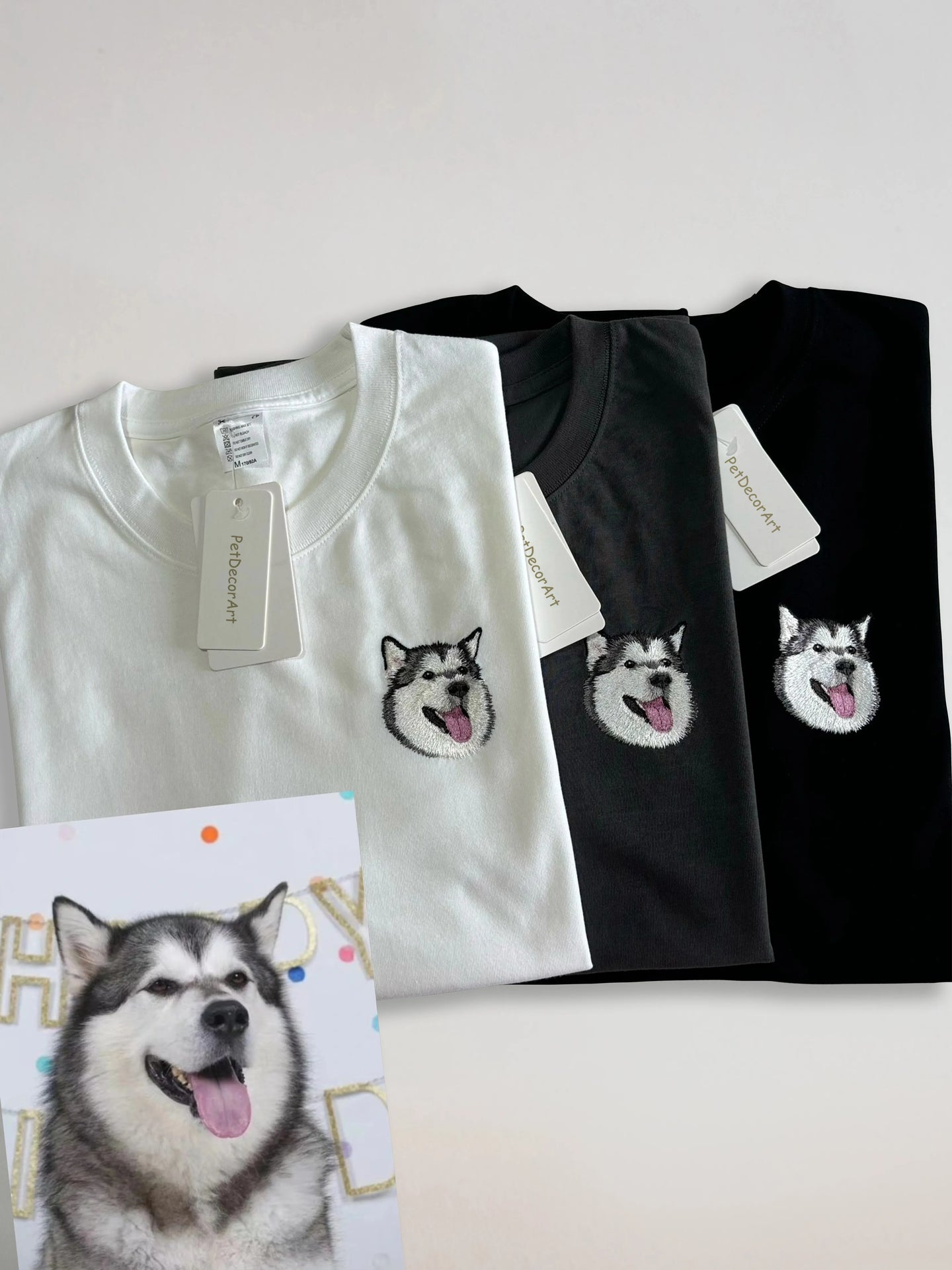
Custom Hand-Embroidered Pet Portrait T-Shirt
This is the most accessible highlighted option for buyers who want a true hand-embroidered portrait without choosing a heavier garment. It works well for warm climates, indoor wear, casual outfits, and gifts that can be layered under a jacket.
Listed price: $49.98
Material: 100% pure cotton
Portrait options: 2-inch head portrait or 3.5-inch classic/full-body portrait
Placement: Left chest
Listed garment sizes: S through 3XL
Listed colors: Black, white, blue, brown, gray, pink, beige, and red
Listed production time: Approximately 15–30 days
Choose the 2-inch version for a subtle single-pet face. Choose the larger option when the pet has important forehead markings, unusual ears, a colorful coat, or a recognizable full-body pose.
View the Embroidered Pet Portrait T-Shirt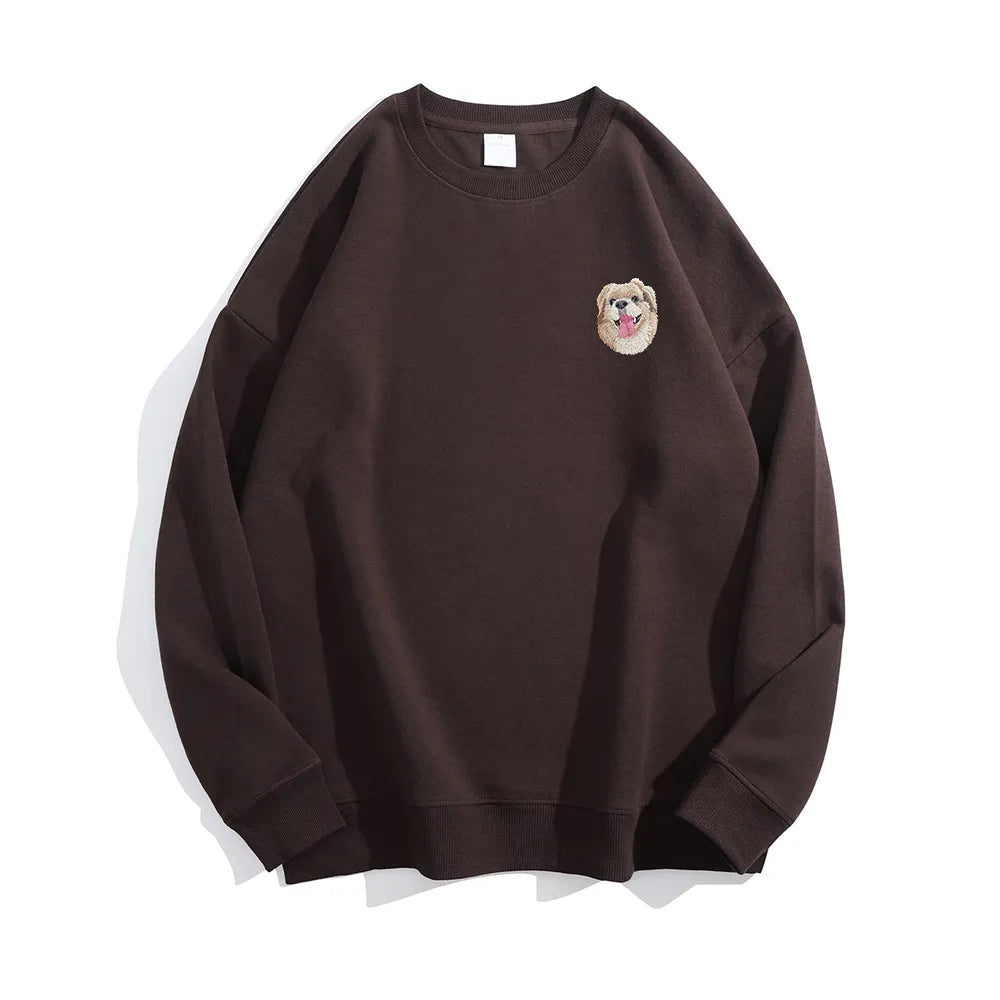
Custom Embroidered Personalized Sweatshirt
A crewneck sweatshirt is a practical choice when you want the portrait to feel personal without making the garment difficult to style. The relatively flat chest area gives the embroidered face a clean background, and the mid-weight fabric can be layered across several seasons.
Listed price: $69.98
Material: Cotton-rich blend containing 51–70% cotton
Fabric weight: Listed at 300–350 g
Portrait options: 2-inch mini or 3.5-inch classic design
Placement: Left chest
Listed color choices: 29 solid colors
Fit: Relaxed unisex crewneck
This is the strongest general recommendation for birthdays, Christmas gifts, pet-parent gifts, and wearable memorials because it balances visibility, comfort, and everyday usefulness.
View the Personalized Pet Portrait Sweatshirt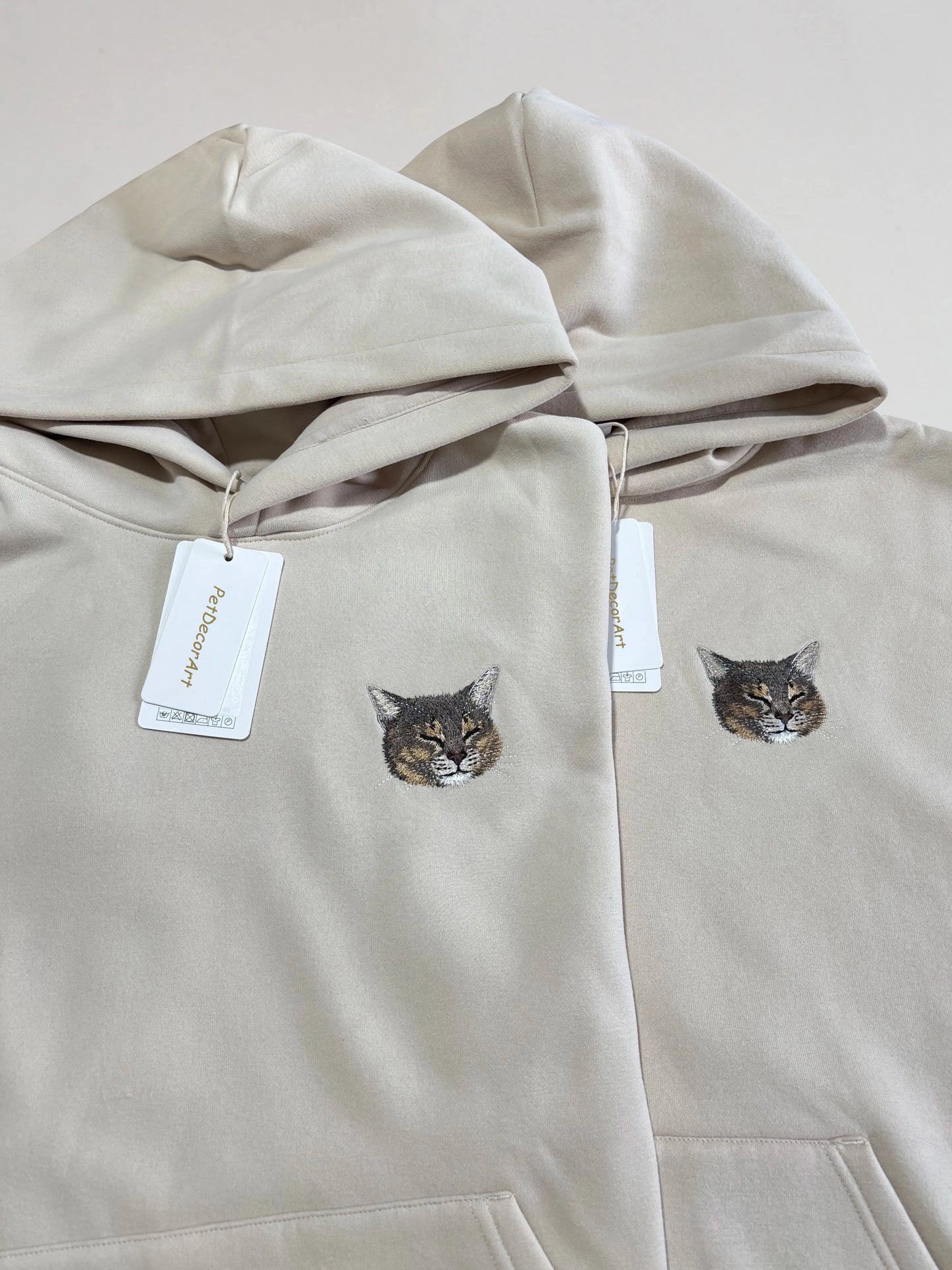
Custom Embroidered Pet Portrait Hoodie
The hoodie is a better match for recipients who prefer relaxed clothing, spend time outdoors, walk their dog in cooler weather, or regularly wear layered streetwear. The listed size range is broader than the highlighted T-shirt option.
Listed price: $64.98
Material: 100% pure cotton
Embroidery: Product page lists more than 8,000 stitches
Portrait options: 2-inch mini or 3.5-inch classic design
Placement: Left chest
Listed garment sizes: S through 5XL
Listed colors: Black, white, blue, brown, gray, pink, beige, and red
Listed production time: Approximately 15–30 days
A light-colored hoodie is especially useful for black, dark brown, or deeply shaded pets. A darker hoodie gives white, cream, or pale-gray coats stronger contrast.
View the Custom Pet Portrait Hoodie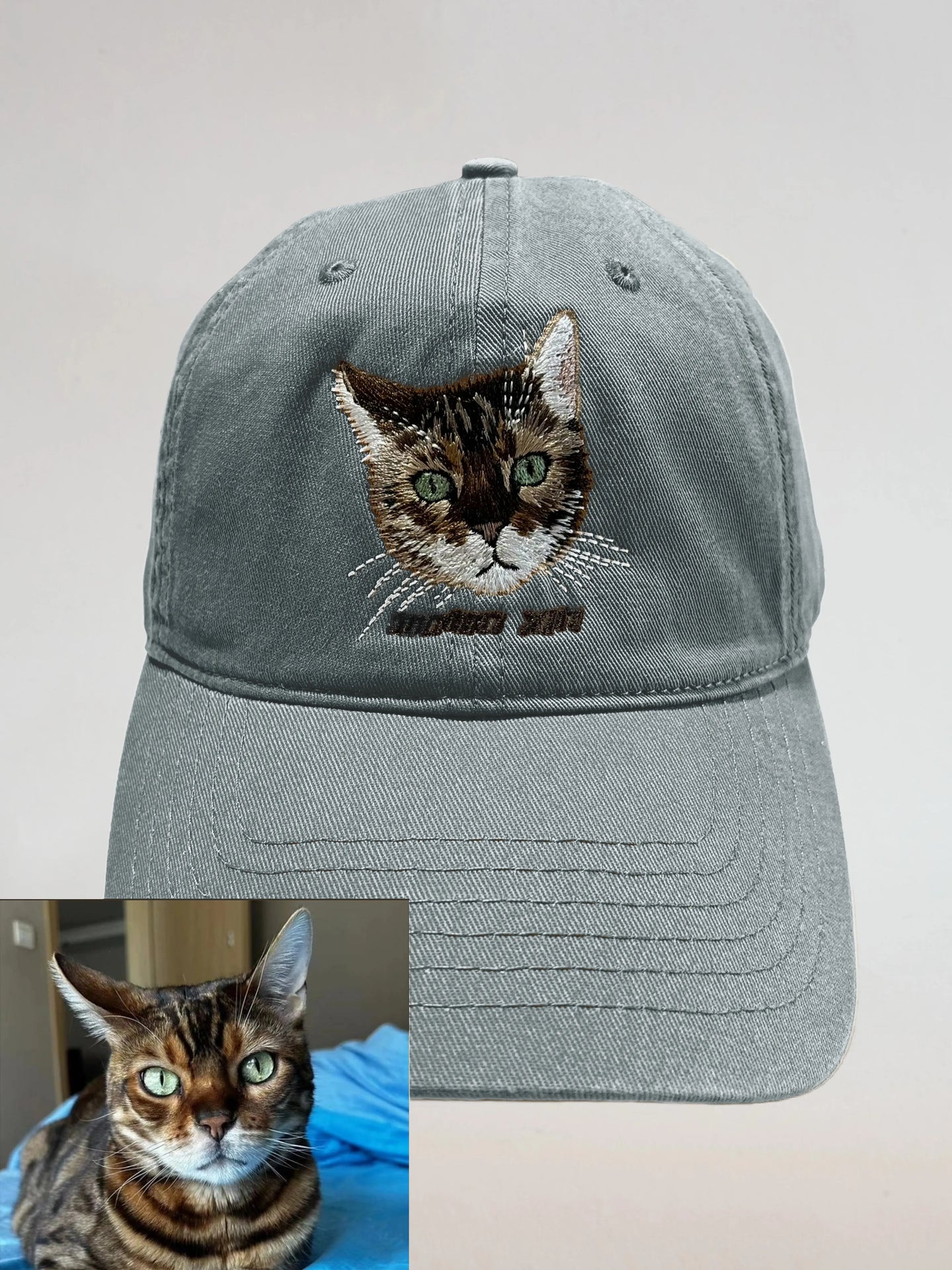
Custom Pet Portrait Hand-Embroidered Cap
An adjustable cap removes much of the sizing risk associated with personalized clothing. It also places the portrait close to eye level, making a small embroidered face easy to notice during walks, travel, outdoor events, or casual daily wear.
Listed price: $39.98
Material: Pure cotton
Portrait size: Approximately 2 × 2 inches
Fit: Adjustable, one-size format
Listed colors: Black, white, blue, brown, gray, pink, beige, green, red, and orange
Listed production time: Approximately 15–30 days
Because the stitch area is small, use one clear face with a simple angle. Avoid full-body poses, multiple pets, busy accessories, or a photograph in which the face occupies only a small part of the image.
View the Hand-Embroidered Pet Portrait Cap| Product | Listed price | Material | Portrait size | Listed size range | Best for | Official source |
|---|---|---|---|---|---|---|
| Embroidered T-shirt | $49.98 | 100% cotton | 2 or 3.5 inches | S–3XL | Warm weather and affordable gifts | Product page |
| Personalized sweatshirt | $69.98 | 51–70% cotton blend, 300–350 g | 2 or 3.5 inches | Check current size selector | Most versatile all-purpose gift | Product page |
| Embroidered hoodie | $64.98 | 100% cotton | 2 or 3.5 inches | S–5XL | Cool weather and relaxed everyday wear | Product page |
| Embroidered cap | $39.98 | Pure cotton | Approximately 2 inches | Adjustable one size | Outdoor wear and lower sizing risk | Product page |
Prices and options checked July 3, 2026. Review the linked product page for current availability, shipping estimates, and final customization charges.
How to Order a Custom Embroidered Pet Portrait
Step 1: Choose the Garment Before Preparing the Artwork
The available stitch area changes between a cap, T-shirt, sweatshirt, and hoodie. Choose the product first so you know whether the design should be a small head portrait or a larger classic portrait.
Step 2: Check the Size Chart
Do not rely only on a familiar size label. Compare the listed chest width and garment length with a shirt, sweatshirt, or hoodie the recipient already owns and likes.
Step 3: Select the Garment Color
Balance portrait contrast with the recipient's wardrobe. A technically perfect contrast color is not useful when the recipient never wears it.
Step 4: Upload the Primary Photo
Use the sharpest image that shows the expression you want embroidered. Avoid sending several photos without identifying which one should control the final design.
Step 5: Choose Head-Only or Classic Portrait
Use head-only for subtle clothing and small accessories. Use the larger option for more markings, a fuller coat shape, or a simple full-body pose.
Step 6: Add Clear Notes
Explain the features the artist must preserve and anything that should be removed from the reference photo, such as a leash, hand, background object, or temporary bandage.
Step 7: Monitor Your Email
PetDecorArt's product pages describe an order review and one-to-one consultation process. Watch the email address used at checkout so questions or approval requests do not delay production.
Step 8: Review the Design Before Production Continues
Check the face shape and markings first. Small decorative changes are less important than correcting an ear, eye, muzzle, or patch that changes the pet's identity.
For a broader explanation of the ordering process, see How to Order a Custom Pet Portrait .
What Should You Write in the Customization Notes?
Good notes are specific without trying to direct every individual stitch. Tell the artist what defines your pet, which image should control the design, and what should not be changed.
Copyable Customization Note
Please use Photo 1 for the main face angle and expression. The most important details are the slightly folded right ear, the narrow white stripe between the eyes, the warm brown eye color, and the darker patch on the left side of the muzzle. Photo 2 shows the most accurate coat color. Please remove the leash and background. Keep the natural eye size and muzzle length rather than making the face more cartoon-like. I would like a clean, realistic embroidered portrait on the left chest.
Useful Details to Mention
- Which photo is the primary reference
- Correct eye and coat color
- Which ear folds or tilts
- Important forehead, muzzle, chest, or eyebrow markings
- Whether the collar should remain or be removed
- Correct spelling of the pet's name
- Whether the piece is a memorial
- Objects or people that should be removed from the image
- Whether you prefer a realistic or simplified result
Details That Usually Do Not Need Long Instructions
- The room or outdoor background, unless it is part of the design
- Every individual strand of fur
- Minor shadows that do not affect the coat color
- Temporary dirt, tear stains, or red-eye from the camera flash
What to Check Before Approving the Embroidered Portrait
Review the design at the approximate size it will appear on the garment. A design that looks highly detailed when enlarged on a phone may look different when reduced to two inches.
Approval Checklist
- Does the head shape match the pet?
- Are the eyes the correct shape, color, and distance apart?
- Is the muzzle too short, wide, narrow, or round?
- Are the ears in their natural position?
- Are major coat patches on the correct side?
- Does the design preserve an important scar, gray muzzle, or uneven marking?
- Does the portrait contrast with the garment color?
- Is the name spelled correctly?
- Is the design the correct size and placement?
- Have unwanted collars, leashes, hands, or backgrounds been removed?
How to Request a Useful Revision
Point to one specific feature and explain the correction. “It does not look like my dog” gives the artist little direction. A clearer request would be:
“Please narrow the white stripe between the eyes, make the left ear stand slightly higher, and use Photo 2 for the warmer brown eye color.”
How to Care for Custom Embroidered Pet Portrait Clothing
Always follow the sewn-in garment care label first. The fabric type, dye, trim, and garment construction may require different treatment even when the embroidery itself is durable.
For additional protection, use a gentle routine that reduces friction, high heat, and direct contact with the stitched surface.
| Care step | Recommended approach | Why it helps | Avoid |
|---|---|---|---|
| Before washing | Turn the garment inside out and close zippers or fasteners | Reduces rubbing against the portrait | Washing with exposed hooks or rough hardware |
| Machine washing | Use a mesh laundry bag, cold water, and a gentle cycle when the care label permits | Limits movement and thread abrasion | Hot water and aggressive cycles |
| Detergent | Use a mild detergent in a normal amount | Reduces harsh chemical exposure | Bleach or strong stain removers directly on the portrait |
| Drying | Reshape and air dry when practical | Avoids unnecessary heat and repeated tumbling | High dryer heat unless the care label allows it |
| Ironing | Iron from the reverse side at a suitable fabric setting | Protects raised threads from direct pressure | Placing a hot iron directly on the embroidery |
| Storage | Fold without placing a hard crease through the portrait or hang on a suitable hanger | Reduces long-term distortion | Compressing the portrait under heavy items |
| Loose thread | Stop wearing the item and contact support or a textile professional | Prevents a small issue from becoming a larger pull | Pulling or cutting an unfamiliar structural thread |
Stain tip: treat the stained fabric around the portrait gently instead of scrubbing the stitched face. Blotting creates less friction than vigorous rubbing.
More information about portrait clothing, stitch decisions, and care is available in PetDecorArt's Custom Pet Embroidery Guide .
How to Choose an Embroidered Pet Portrait as a Gift
A personalized portrait can feel more intimate than an ordinary pet-themed product because it represents a specific animal. That also means the gift requires more planning.
| Occasion | Recommended format | Why it works | Planning detail |
|---|---|---|---|
| Birthday | Sweatshirt, hoodie, or T-shirt | Personal but practical for everyday use | Confirm size and preferred clothing colors |
| Christmas or holiday gift | Sweatshirt or hoodie | Seasonal warmth and strong gift presentation | Order well before holiday production peaks |
| Dog mom or cat mom gift | T-shirt or sweatshirt | Easy to wear and centered on the actual pet | Choose a familiar expression from the recipient's photos |
| Outdoor pet lover | Adjustable cap or hoodie | Useful for walks, parks, travel, and outdoor activities | Select a color that hides normal outdoor wear |
| Pet memorial | Subtle chest portrait on a sweatshirt, T-shirt, or cap | Allows the recipient to carry the pet's image privately | Avoid adding dates or memorial wording unless you know they want it |
| Recipient size unknown | Adjustable cap | Lower sizing risk than personalized apparel | Confirm that the recipient wears caps |
Giving a Memorial Portrait Respectfully
Not everyone wants memorial language on clothing. A simple portrait may feel more comforting than angel wings, dates, a poem, or “rainbow bridge” wording. When you are unsure, preserve the pet's familiar expression and keep the design understated.
For additional remembrance ideas, read How to Make a Pet Memorial .
How Much Do Custom Embroidered Pet Portraits Cost?
The highlighted PetDecorArt embroidered products checked on July 3, 2026 were listed from $39.98 to $69.98. The final cost can depend on the product, garment size, portrait style, customization, shipping method, and any current promotions.
| Cost factor | What it affects | Question to ask before checkout |
|---|---|---|
| Garment type | T-shirt, sweatshirt, hoodie, polo, and accessories have different base prices | Is the selected garment included in the displayed price? |
| Portrait size | A larger stitch area may require more labor and thread | Is the 2-inch or 3.5-inch option selected? |
| Number of pets | Additional faces may require a larger design or separate charge | Can this product accommodate more than one pet? |
| Garment size | Some stores charge more for extended sizes | Does the price change after selecting the final size? |
| Shipping method | Faster shipping may increase the order total | Does the estimate include production and transit? |
| Personalized return rules | Custom pieces may have stricter cancellation and return conditions | When does production begin, and what changes are allowed after approval? |
How Long Does Production Take?
The highlighted T-shirt, hoodie, and cap pages list an approximate production timeline of 15–30 days. PetDecorArt's custom-handmade shipping information also notes that confirmation, crafting, and transit are separate stages.
For a birthday, holiday, or memorial event with a fixed date, do not treat the crafting estimate as a guaranteed delivered-by date. Leave time for:
- Order processing and photo review
- Questions or one-to-one consultation
- Design approval and revisions
- Hand embroidery
- Quality inspection and packaging
- International or domestic transit
Order early. Personalized products cannot be pulled from a shelf and shipped immediately. Waiting for a design response or revision can extend the schedule even when the artist's production time remains unchanged.
Common Mistakes to Avoid
Using a Small Social-Media Screenshot
A screenshot may remove the detail needed to understand eye shape, markings, and coat texture. Look for the original image file.
Choosing a Garment That Matches the Coat Too Closely
Dark thread on black fabric and pale thread on white fabric can reduce the visible silhouette. Select enough contrast for the portrait to remain readable.
Trying to Fit Too Much Into a Small Design
Two pets, a full body, a name, flowers, a collar, dates, and a detailed background may not fit comfortably within a two-inch stitch area.
Ignoring the Garment Size Chart
Custom embroidery cannot solve a poor garment fit. Measure a comparable item before choosing the final size.
Submitting Several Photos Without Instructions
The artist may not know which image controls the expression, color, pose, or markings. Label the purpose of each supporting photo.
Ordering Too Close to the Gift Date
Handmade production, consultation, approval, and delivery all require time. Order as early as possible for holidays and events.
Assuming Personalized Items Have Standard Return Rules
Read the product's cancellation, revision, and custom-return terms before approving production.
Approving the Design Only at Maximum Zoom
Review it both enlarged and at the approximate finished size. The portrait must remain recognizable from normal viewing distance.
Frequently Asked Questions
What is a custom embroidered pet portrait?
It is a personalized image of a specific pet recreated with colored thread on fabric. The portrait is usually made from a customer-supplied photograph and can be added to clothing, caps, scarves, pajamas, framed fabric, or other textile products.
Are PetDecorArt pet portraits hand embroidered?
The highlighted PetDecorArt T-shirt, hoodie, cap, and related apparel pages describe their pet portraits as hand embroidered or hand stitched from the customer's photo. Check the individual product description because materials and production methods can vary between items.
What photo is best for pet embroidery?
Use a sharp, well-lit photo taken near the pet's eye level. The eyes, ears, muzzle, markings, and coat colors should be clearly visible. Send a separate daylight color reference when the primary photo has inaccurate lighting.
Can a blurry pet photo be embroidered?
Minor softness may be manageable when supporting photos show the missing details, but an artist cannot reliably reproduce features that are hidden or blurred in every image. Use the original photo file whenever possible.
Is a 2-inch embroidered pet portrait large enough?
A 2-inch portrait is usually large enough for one clear pet face with simple markings. It is less suitable for multiple pets, detailed full-body poses, long names, or complex accessories.
Should I choose a head portrait or a full-body portrait?
Choose a head portrait when the eyes, ears, muzzle, and facial markings carry most of the pet's identity. Choose a larger full-body option when posture, tail shape, body proportions, or a distinctive sitting pose is equally important.
Can two pets be included in one embroidered portrait?
It may be possible, but the available stitch area can limit detail. Contact the seller before ordering to confirm whether the selected product supports multiple pets and whether a larger design or additional charge is required.
Which garment is best for an embroidered pet portrait?
A crewneck sweatshirt is the most versatile general choice. A hoodie is better for cooler weather, a T-shirt works well in warm climates, and an adjustable cap reduces sizing risk when buying a gift.
What garment color should I choose?
Choose a color that contrasts with the outer edges of the pet's coat. Light garments usually help dark pets stand out, while dark or saturated garments define white and cream pets more clearly.
How long does a custom embroidered pet portrait take?
The highlighted PetDecorArt T-shirt, hoodie, and cap pages list approximately 15–30 days for production. Consultation, design approval, revisions, packaging, and shipping add time, so the production estimate should not be treated as the final delivery date.
How much does a custom embroidered pet portrait cost?
At the time checked on July 3, 2026, the highlighted PetDecorArt options were listed from $39.98 for a cap to $69.98 for a personalized sweatshirt. The final cost can change with product options, shipping, promotions, and additional customization.
How should embroidered pet clothing be washed?
Follow the sewn-in garment care label first. For added protection, turn the garment inside out, use cold water and a gentle cycle when permitted, avoid bleach, reduce direct friction on the portrait, and avoid ironing directly on the stitches.
Can embroidered pet portraits be memorial gifts?
Yes. A subtle portrait on a sweatshirt, T-shirt, hoodie, or cap can provide a personal way to carry a pet's memory. Avoid adding memorial dates or wording unless you know the recipient wants them.
Can animals other than dogs and cats be embroidered?
Many custom portrait services can work from photos of rabbits, birds, horses, hamsters, and other animals. Confirm the selected product and provide clear photos that show the animal's most recognizable features.
Can I return a personalized embroidered portrait?
Personalized products commonly have stricter return and cancellation rules because they cannot be resold. Review the current product policy before approving production and report any quality issue promptly after delivery.


