
Latest updated: May 15, 2026
Quick answer: dogs and cats are both interested in people, but they show it differently
Dogs usually show interest in a more obvious, social way: following you, greeting you at the door, watching your hands, bringing toys, asking for walks, and reacting quickly to voice or movement. Cats often show interest in a quieter, more selective way: slow blinking, staying near you without demanding contact, rubbing against furniture or legs, watching from a high spot, investigating new smells, or choosing one room because you are in it.
The biggest difference is not “dogs love people and cats do not.” It is that dogs often seek shared activity, while cats often seek controlled access. A dog may want to join what you are doing. A cat may want to observe first, decide whether the situation feels safe, and then participate on its own terms.
What does “interest” mean when comparing dogs and cats?
When pet owners compare dog and cat interest, they are usually asking one of three things: Which pet is more attached to people? Which pet is more curious? Which pet is more fun to live with? The honest answer depends on what kind of interaction you value.
Dogs are generally easier to read because many dog behaviors are outward-facing. They look at faces, track human movement, respond to routine cues, and often want to participate in family activity. Cats are easy to underestimate because their attention can be subtle. A cat that sits across the room and watches you for 20 minutes may be highly engaged; it simply does not need to be physically on top of you to show it.
For everyday pet owners, the better question is not “which pet is more interested?” but “what kind of interest fits my home, schedule, and personality?”
Dog vs cat interest at a glance
The table below compares common forms of interest in a way that is useful for families, apartment dwellers, first-time pet owners, and anyone choosing a custom portrait style that should match a pet’s real personality.
| Type of interest | Dogs often show it by | Cats often show it by | What it means for owners | Helpful source |
|---|---|---|---|---|
| Human attention | Following, greeting, leaning, bringing toys, looking for verbal praise | Slow blinking, sitting nearby, rubbing, choosing the same room, brief check-ins | Dogs may need more direct engagement; cats may prefer shorter, choice-based attention. | AVMA pet ownership data |
| Play | Chase, fetch, tug, running games, puzzle feeders, training games | Stalking, pouncing, batting, climbing, hiding, short hunting-style bursts | Dogs often enjoy cooperative play; cats often prefer short prey-like play sessions. | ASPCA pet care resources |
| Routine | Watching the door, reacting to keys, leash, bowls, car rides, family schedules | Anticipating meal time, sleeping spots, sun patches, litter box routines, quiet hours | Both pets learn household patterns quickly, but dogs often make routines more visible. | APPA industry stats |
| Space and territory | Wanting access to people, yard, doorways, cars, and walking routes | Claiming vertical space, windows, boxes, beds, warm surfaces, and quiet corners | Dogs often center space around movement; cats often center space around control and safety. | PetDecorArt home decor guide |
| Novelty | Sniffing visitors, inspecting bags, reacting to outdoor sounds, checking new objects | Careful investigation, scent marking, paw testing, watching first before approaching | Dogs may rush in; cats may need time. Neither response is automatically better. | AVMA pet ownership statistics |
| Affection | Tail wagging, leaning, licking, cuddling, eye contact, sleeping near the owner | Head bunting, kneading, slow blinks, tail-up greeting, soft body posture, sleeping nearby | Cat affection is often less performative but still meaningful. | PetDecorArt dog and cat portrait guide |
Interest in people: dogs usually ask, cats often choose
A dog’s interest in people is usually easy to spot. Many dogs move toward people, seek eye contact, respond to names, and use body language that asks for something: play, food, comfort, a walk, or permission. This makes dogs feel emotionally expressive, especially to people who like constant feedback from a pet.
Cats can be just as attached, but they tend to manage distance more carefully. A cat may sit on the arm of the sofa instead of your lap. It may follow you from room to room but stop at the doorway. It may show trust by sleeping nearby, exposing its belly without wanting a belly rub, or blinking slowly while facing you. These are not weak signals. They are cat-style signals.
Owner takeaway
Choose a dog if you enjoy visible participation and frequent social feedback. Choose a cat if you enjoy companionship with more personal space. In a mixed dog-and-cat household, the best routine usually gives the dog structured activity and gives the cat escape routes, vertical space, and choice.
Interest in play: dogs like shared games; cats like realistic “hunts”
Dogs often show interest through cooperative games. Fetch, tug, trick training, scent games, and neighborhood walks all give dogs a job to do with a person. A dog that brings you a toy is not just bored; it may be inviting you into a shared routine.
Cats usually play in shorter, sharper bursts. A cat may ignore a toy lying still on the floor but suddenly chase it when it moves like prey. Wand toys, tunnels, crinkle sounds, high shelves, and hiding spots often work better than toys that simply sit in a basket.
| Pet | Best play style | Session length that often works | Common mistake | Better approach |
|---|---|---|---|---|
| Dog | Interactive, social, reward-based | Several short sessions or one longer active period, depending on age and breed | Only giving physical exercise | Add sniffing, training, and puzzle work so the dog’s brain is tired too. |
| Cat | Short prey-like bursts | Five to fifteen minutes is often more realistic than one long session | Leaving toys out all day and expecting excitement | Rotate toys, mimic prey movement, and end with a small treat or meal. |
Interest in food and routine: both pets notice more than you think
Dogs often make food interest obvious: waiting near the kitchen, watching the treat hand, responding to the sound of a bag, or learning exactly when dinner usually happens. Cats can be just as routine-driven. Many cats know the sound of a can opening, the time of day a person wakes up, or which family member is most likely to give snacks.
The difference is usually intensity and expression. A dog may look eager, vocal, and ready to act. A cat may sit in the same spot every morning and stare until the routine begins. Both are forms of interest. Both can become demanding if the household rewards pushy behavior every time.
Practical routine tips
- Feed dogs and cats at predictable times instead of rewarding every demand.
- Use puzzle feeders for pets that eat too fast or need more mental stimulation.
- Separate dog and cat feeding zones in multi-pet homes.
- For cats, keep food, water, litter, and resting areas from feeling crowded.
- For dogs, pair routines with calm behavior so excitement does not become jumping or barking.
Interest in home spaces: dogs track family movement; cats map safe zones
Dogs often treat the home as a social map. They care where people are, which door leads outside, where the leash is stored, and where visitors enter. Their interest is tied to movement, access, and family activity.
Cats often treat the home as a security map. They care about high places, quiet corners, window views, hidden routes, warm surfaces, and scent-marked objects. A cat that “ignores” guests from a high shelf may actually be actively studying the room from the safest possible place.
This matters when decorating a pet-friendly home. If your dog’s personality is active and people-centered, a portrait near the entry, hallway, or living room may feel natural. If your cat’s personality is calm, elegant, or mysterious, a framed piece in a reading corner, bedroom, or quiet gallery wall may match the way the cat actually lives in the home.
Affection: dogs are usually more obvious, cats are more selective
Dog affection often feels direct. Dogs may greet you with their whole body, lean into your legs, bring toys, climb close, or follow you from room to room. Many dog owners interpret this as loyalty, and in daily life it can feel deeply reassuring.
Cat affection can be easy to miss if you expect dog-like behavior. A cat may turn its back while sitting near you because it trusts you. It may rub its cheek on your hand to mix scents. It may sleep at the foot of the bed because that is close enough to feel connected but far enough to feel safe. A cat choosing to stay near you is often the compliment.
| Signal | Dog meaning | Cat meaning | What to do |
|---|---|---|---|
| Following you | Wants activity, comfort, or direction | Wants proximity but may not want handling | Offer attention, but watch body language before touching. |
| Eye contact | Can signal focus, bonding, or request for direction | Soft eyes or slow blinks can signal trust | Respond calmly; avoid staring hard at cats. |
| Body contact | Leaning, cuddling, or asking for reassurance | Rubbing or brief contact to mark scent and connect | Let the pet set the intensity. |
| Bringing objects | Often an invitation to play or share attention | Can be play, hunting behavior, or attention-seeking | Reward calmly and redirect into a healthy game. |
What dog and cat interests teach us about better pet photos
The best pet photo is not always the technically perfect one. It is the photo that captures what your pet cares about. For a dog, that may be a bright-eyed look before a walk, a toy held proudly, or a relaxed nap after a long day. For a cat, it may be a window-watch pose, a curled sleeping position, a slow-blink face, or the exact “do not disturb” expression that makes the cat feel like itself.
PetDecorArt’s photo guides make the same point in a practical way: clear eyes, natural light, and a simple background make a pet easier to turn into custom art. This is especially important for black dogs and black cats, where fur detail can disappear if the light or background is wrong.
Photo checklist before ordering custom pet art
- Choose a photo where the eyes are sharp and visible.
- Use natural light near a window or outdoors in open shade.
- For dogs, include one face photo and one body or posture reference.
- For cats, include one calm expression photo and one photo that shows coat pattern or tail shape.
- For black pets, avoid dark backgrounds and harsh direct sun.
- Upload two to four photos when possible so the artist can understand markings, expression, and personality.
PetDecorArt product picks by dog and cat personality
Instead of recommending by “dog vs cat” only, choose the keepsake by the kind of interest your pet shows. A social dog, a quiet senior cat, a playful kitten, and a dignified older dog may all deserve different art styles.
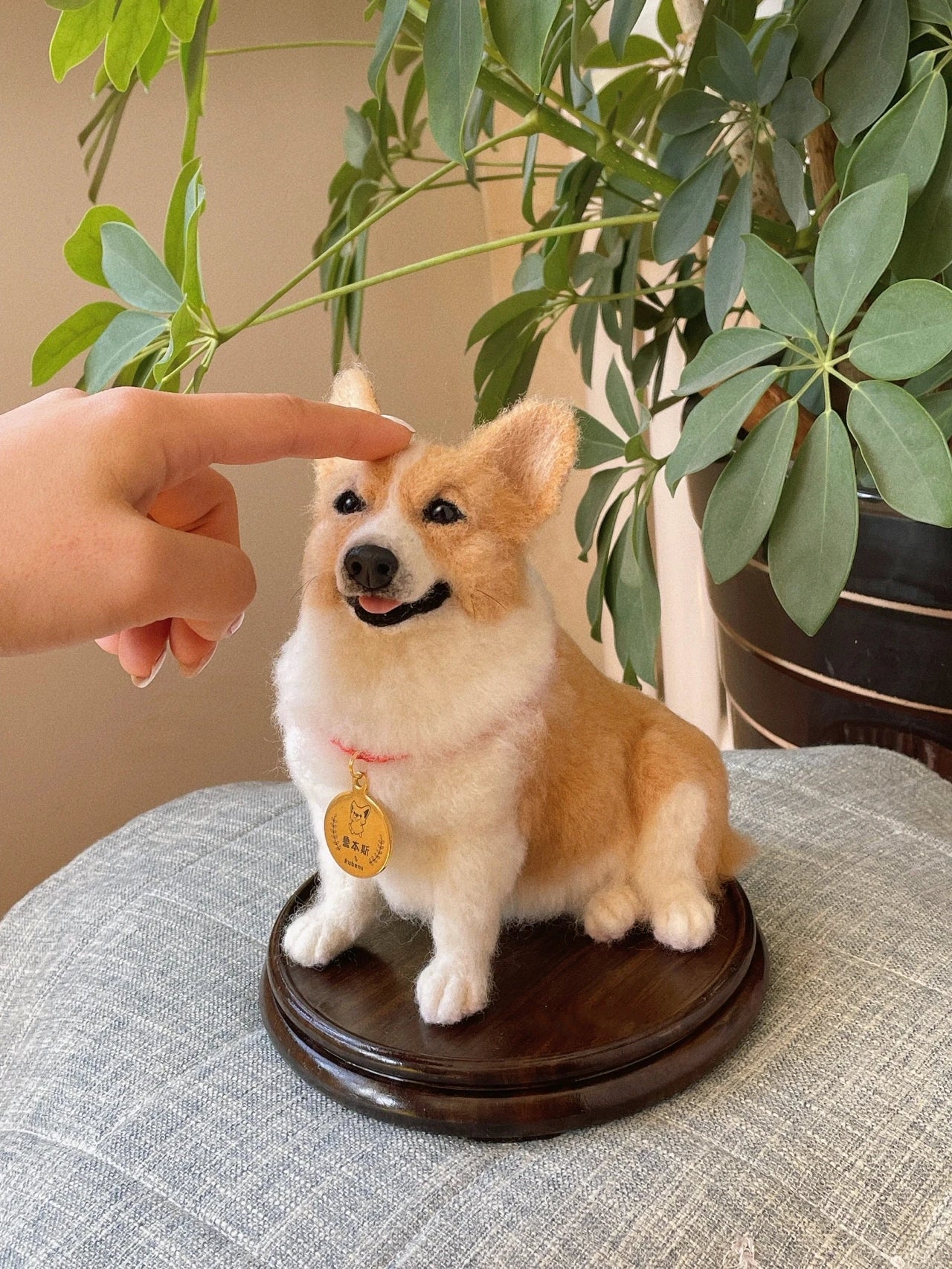
3D Custom Stuffed Animals From Picture - Lifelike Full Body Pet Portraits
Best for pets whose posture says everything: a dog’s proud sit, a cat’s curled body shape, a funny tail position, or a memorial piece that should feel physically present in the room.

Custom Pet Oil Painting from Photo on Glass
Best for expressive faces: a dog’s warm eye contact, a cat’s intense stare, a senior pet’s gentle expression, or a formal portrait that should feel more like home decor than a novelty gift.

Handmade Custom Embroidered Pet Portrait Zip Hoodie
Best for everyday pet parents who want a wearable reminder of a dog, cat, or other companion. This works especially well for pets with a recognizable face, marking, or funny expression.
Which pet is more interesting to live with?
A dog is often more interactive in a way that feels obvious day to day. If you want a pet that greets you loudly, joins outdoor routines, learns visible commands, and treats shared activity as bonding, a dog may feel more engaging.
A cat is often more interesting if you enjoy observation, subtle communication, and a pet with strong personal preferences. Cats can turn the smallest home details into rituals: one window, one blanket, one box, one hour of sunlight, one person they trust most.
Many households love both because the forms of interest balance each other. The dog brings open enthusiasm. The cat brings quiet choice. Together, they make home life feel layered rather than repetitive.
FAQ: dog and cat interest
Are dogs more interested in humans than cats?
Dogs often show human interest more openly, but that does not mean cats are uninterested. Dogs may follow, greet, and ask for interaction. Cats may stay close, observe, slow blink, rub, or choose to share a room. The signals are different.
Why does my cat watch me but not come over?
Watching can be a sign of interest. Many cats prefer to observe before joining. Your cat may feel comfortable nearby but may not want touch at that exact moment.
Why does my dog follow me everywhere?
Your dog may be seeking attention, routine, comfort, activity, or simply social closeness. If the behavior becomes anxious or intense, add calm independence practice and structured enrichment.
Do cats love their owners like dogs do?
Cats can form strong bonds with people, but they often express attachment with proximity, scent marking, slow blinking, and quiet routines rather than constant physical affection.
Are cats less playful than dogs?
Not necessarily. Cats often prefer shorter, hunting-style play sessions. Dogs often enjoy longer cooperative games. A cat that ignores one toy may become very playful when the toy moves like prey.
Which pet is better for a busy household?
It depends on the household. Dogs usually need more scheduled outdoor time, training, and direct interaction. Cats can be more flexible, but they still need daily play, clean litter, safe space, and attention.
Which pet is better for emotional companionship?
Both can be excellent companions. Dogs may offer more visible reassurance. Cats may offer calmer, quieter companionship. The better match depends on whether you prefer active interaction or low-pressure closeness.
Can a dog and cat both be interested in the same person?
Yes. In many homes, both pets bond strongly with the same person, but they may compete for attention differently. Give each pet separate routines, separate resting spaces, and one-on-one time.
What kind of pet photo best captures dog interest?
For dogs, choose photos with clear eyes, natural expression, and a pose that shows personality: waiting at the door, holding a toy, sitting proudly, or relaxing after play.
What kind of pet photo best captures cat interest?
For cats, choose photos that show expression and environment: window watching, slow-blink faces, curled sleeping positions, high-perch poses, or a calm stare with good eye detail.
Turn your pet’s real personality into a keepsake
Whether your dog is openly joyful or your cat is quietly expressive, the best custom pet art starts with the behavior that makes them unforgettable. Choose a clear photo, match the style to the pet’s personality, and create something you will actually want to see every day.
Explore PetDecorArt custom pet decorations


