

Most cats stay pregnant for about 63 to 65 days, which works out to roughly 9 weeks. In real life, though, normal pregnancies do not all end on the exact same day. Depending on how the date is counted, veterinary sources list broader normal ranges from about 58 to 71 days. That is why many owners feel confused when one article says 63 days and another says 65 or 67.
The practical answer is simple: if your cat may be pregnant, think in terms of about two months, with the average landing in the mid-60-day range. The most useful next step is not guessing from her belly alone. It is getting the timing confirmed by your vet, feeding correctly through late pregnancy, and knowing what labor signs are normal versus urgent.
How long are cats pregnant?
For most owners, the cleanest answer is this: cats are pregnant for about 9 weeks. The exact number changes slightly depending on whether someone is counting from breeding, ovulation, or the date pregnancy was first suspected.

| What you are asking | Best practical answer | Source link |
|---|---|---|
| Typical pregnancy length | Usually about 63–65 days | VCA: Pregnancy and Labor in Cats |
| Common broader normal range | Often listed as 58–70 days | VCA: Feeding the Pregnant Cat |
| Another veterinary range you may see | 60–67 days or 64–71 days | VCA / VCA: Breeding and Queening Cats |
| Easy way to remember it | Roughly 2 months, usually around 9 weeks | VCA: Estrous Cycles in Cats |
So if you only remember one number, remember 65 days. That is close enough for everyday planning, while still leaving room for a normal range on either side.
A pregnancy calendar owners can actually use
Most cat owners do not know the exact day conception happened. That is why a practical timeline is more useful than a “week-by-week miracle of life” article full of fluff. Here is the simple version that helps you plan vet care, food, and birth prep.
| Timing | What it usually means for you | Best move | Source link |
|---|---|---|---|
| Days 0–20 | At-home guessing is unreliable. Many cats do not show obvious signs yet. | Do not rely on internet checklists alone. | Merck Veterinary Manual |
| Days 21–30 | A vet may be able to confirm pregnancy by exam or ultrasound. | Book a vet visit if you need a real answer instead of a guess. | Merck Veterinary Manual |
| Days 25–35 | Ultrasound is especially useful in this window and can check fetal viability. | Ask your vet whether ultrasound makes sense for timing and monitoring. | Merck: Pregnancy Determination |
| Last 3 weeks | Calorie needs rise more sharply and meal volume often needs to change. | Use a quality kitten or growth diet and feed more often. | Merck Veterinary Manual |
| After day 55 | X-rays can help estimate how many kittens to expect. | Helpful if you want a better idea when labor is actually finished. | Merck Veterinary Manual |
| Days 63–65 | This is the average due window many owners end up seeing. | Keep the nesting area ready and watch calmly. | VCA |
| Days 64–71 | Still within a normal range in some veterinary references. | Do not self-diagnose a problem based on one number alone. | VCA: Estrous Cycles in Cats |
How to tell if your cat may be pregnant
A lot of owners first notice pregnancy only when the belly looks fuller. The problem is that a fuller belly is not a diagnosis. Pregnancy is one possibility, but not the only one.
If your cat is unspayed and has access to intact male cats, pregnancy is absolutely possible. A female cat can get pregnant during her heat cycle, and cats can even become pregnant on their very first estrous cycle. That is one reason accidental litters happen so easily.

What owners usually notice first
- A rounder belly later in pregnancy
- Changes in appetite or eating pattern as pregnancy progresses
- More time spent hiding or nesting as labor gets close
- Behavioral changes near labor, such as restlessness, panting, or overgrooming
The mistake many people make is assuming, “Her belly got bigger, so she must be pregnant.” That is not safe. A cat’s abdomen can also look enlarged from worms, obesity, fluid buildup, organ disease, or a serious uterine infection such as pyometra.
When a vet can confirm pregnancy

If you want a real answer, this is the section that matters most.
| Method | When it becomes useful | Why owners choose it | Source link |
|---|---|---|---|
| Physical exam / abdominal palpation | About day 21–30 | Fast first check when timing is early | Merck Veterinary Manual |
| Ultrasound | Best around day 25–35 | Useful for confirming pregnancy and checking fetal viability | Merck: Pregnancy Determination |
| X-ray | After day 55 | Helpful for estimating kitten count late in pregnancy | Merck Veterinary Manual |
If you are trying to figure out how close your cat is to labor, an X-ray late in pregnancy can be more practical than endless guessing because it helps you know how many kittens should arrive before labor is truly over.
What to feed a pregnant cat
Feeding matters more in late pregnancy than many owners realize. During the first two trimesters, the mother’s nutritional needs are closer to those of a healthy young adult cat. As the pregnancy moves into the final stretch, her calorie needs climb and her stomach space can feel tighter, so smaller, more frequent meals often work better than one or two large meals.

A simple feeding plan that makes sense
- Use a high-quality kitten food or a diet labeled for growth or all life stages.
- Check that the food is complete and balanced for the right life stage.
- Feed more often as her pregnancy advances, especially in the last trimester.
- Do not overfeed just because she is pregnant. Extra body fat can make labor harder.
- Do not add calcium or vitamins on your own unless your veterinarian tells you to.
This is one of those situations where “more” is not always “better.” Underfeeding is risky, but overfeeding can also raise the chance of a harder delivery. The goal is steady condition, not guesswork and not panic feeding.
| Feeding point | Plain-English takeaway | Source link |
|---|---|---|
| First two trimesters | Nutritional needs are closer to a normal young adult cat than many owners think. | VCA: Feeding the Pregnant Cat |
| Late pregnancy | Many vets recommend kitten food or growth formula, with more frequent meals. | VCA / Merck Veterinary Manual |
| Food label matters | Look for a complete-and-balanced life-stage claim rather than a trendy label. | Cornell Feline Health Center |
| Supplements | Do not start calcium or vitamin supplements without your vet’s guidance. | Merck Veterinary Manual |
Signs labor is close
Most pregnant cats do not need dramatic human intervention. What they need is a quiet, clean place, a calm owner, and someone who knows the difference between normal labor and trouble.

Common signs labor may be near
- Nervousness or restlessness
- Overgrooming
- Panting
- Refusing food during the final day
- Wanting seclusion
- Milk appearing from the mammary glands 24–48 hours before labor
- A rectal temperature drop to under 100°F in the last 24 hours in many cats
Stage I labor can last 12 to 24 hours and may look more like behavioral change than active pushing. That is why first-time cat owners often miss it. Visible abdominal contractions belong to the active delivery stage.
When to call the vet immediately
Most cat pregnancies end without major problems. Still, there are a few situations where waiting and watching is the wrong move.

| Red flag | Why it matters | Source link |
|---|---|---|
| Brown, green, black, or pus-colored discharge during pregnancy | Can point to miscarriage, infection, or other serious trouble | VCA: Miscarriage in Cats |
| Fever, abdominal pain, obvious illness | Can signal infection or pregnancy loss | VCA |
| Stage I or Stage II labor lasting more than 24 hours | Possible dystocia or ineffective contractions | Merck Veterinary Manual |
| More than about 1–4 hours between kittens during active labor | May mean labor is not progressing normally | Merck Veterinary Manual |
| Severe maternal distress or kittens born dead / near death | Needs immediate veterinary attention | Merck Veterinary Manual |
If something feels off, trust that instinct and call your vet. Pregnancy and labor are not the time to test home remedies from random comment sections.
Why a bigger belly does not always mean pregnancy

This is worth saying plainly: a swollen or rounded abdomen is not the same thing as a confirmed pregnancy. Vets also see abdominal enlargement from obesity, intestinal parasites, fluid buildup, enlarged organs, tumors, heart disease, and serious uterine disease.
Pregnancy is one possible reason. It is not the only reason. So if your unspayed cat suddenly looks larger and you do not know whether she mated, a vet exam is much smarter than waiting for surprises.
Related owner reminder: the easiest way to prevent accidental pregnancy is spaying. Veterinary guidance also notes there is no valid medical or behavioral reason to let a cat have one litter before spaying.
PetDecorArt picks for saving the kitten stage
Once the pregnancy is over and the chaos settles down, a lot of cat owners want to keep something from that season of life that feels more lasting than a phone photo. That is where a custom cat keepsake makes sense.
If you want the most cat-specific starting point, PetDecorArt already has a dedicated Custom Cat Portraits page with style options, photo guidance, memorial ideas, and tips for getting a better reference image. If you are photographing a dark-coated cat, their Black Dog / Black Cat Photo Tips guide is also worth bookmarking before you upload pictures.

Custom Cat Portraits
This is the best page to start from if you are not sure what format you want yet. PetDecorArt’s cat-specific page lets you browse by style and occasion, and it gives clear photo tips for cats, multi-cat portraits, and cat + owner portraits.
- Made from your cat photo
- Styles include oil painting, wool-felt, embroidery, and clay
- Proof and revisions are available
- Helpful photo tips built for cat owners
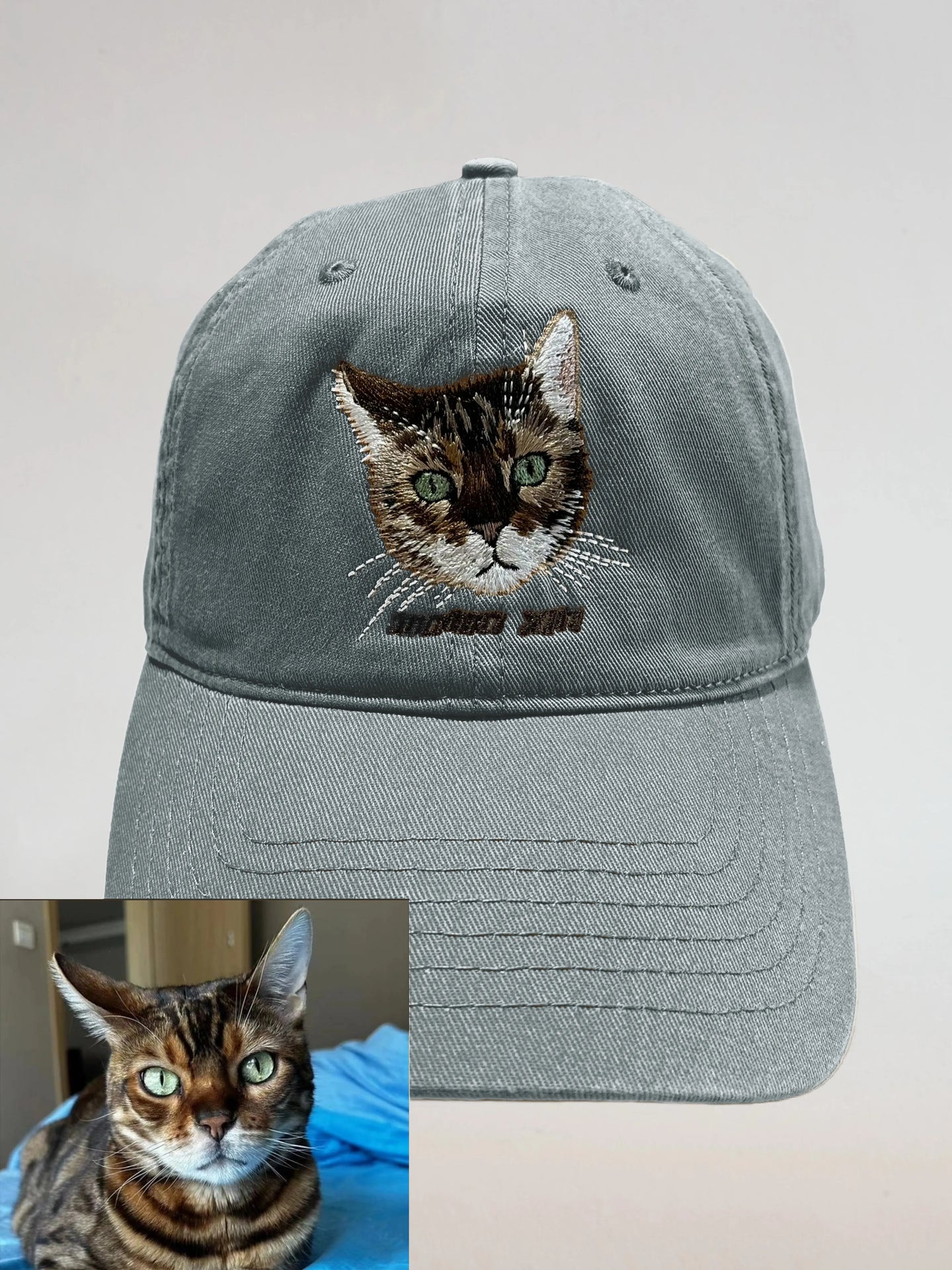
Custom Pet Portrait Hand Embroidered Caps
Good for owners who want something practical instead of wall art. This one is easy to wear on school runs, coffee trips, or the kind of tired new-kitten mornings when you still want your cat close.
- 100% pure cotton
- Hand-embroidered from photo
- Approximate portrait size: 2" × 2" (5 × 5 cm)
- Production timeline: about 15–30 days
- Multiple color options listed on the product page

Custom Hand Painted Pet Portraits Oil Paintings With Frames
If you want something that feels more like a finished home keepsake than an everyday accessory, this is the stronger fit. It is especially good for preserving the pregnancy-and-kitten era as something you can actually hang and keep.
- Painted on glass
- Framed and gallery-ready
- Official sizes listed from 4" × 6" up to 8" × 12"
- Hand-painted from your photo
- PetDecorArt notes that a confirmation photo is sent before shipping

Custom Hooded Sweatshirt with Pet Portrait
This one works well if you want something personal but less formal than framed art. It is also a nice “new kitten household survived the first month” gift.
- Custom embroidered pet portrait
- Premium 320g cotton-blend fleece
- Unisex fit
- Sizes listed from S to 5XL
- Wide color selection on the official page
FAQ
Are cats pregnant for 2 months or 9 weeks?
Both ways of saying it are basically correct. Two months is the easy everyday answer. Nine weeks is the closer shorthand for the average veterinary range of about 63 to 65 days.
Can a cat get pregnant on her first heat?
Yes. Cats can become pregnant on their very first estrous cycle, which is one reason accidental litters happen so often in unspayed females.
How soon can a vet tell if a cat is pregnant?
A vet may be able to confirm pregnancy around days 21 to 30. Ultrasound is especially useful around days 25 to 35.
When should a pregnant cat get an X-ray?
Late in pregnancy, usually after day 55. This helps estimate how many kittens are present so you have a better sense of when labor is actually complete.
What should I feed a pregnant cat?
A quality kitten food or another complete-and-balanced growth or all-life-stages food is a common veterinary recommendation. Smaller, more frequent meals often help later in pregnancy.
Should I let my cat have one litter before spaying?
No. Veterinary guidance does not support the old myth that a cat needs one litter first. If she is not meant for breeding, spaying is the simplest way to prevent accidental pregnancy and reduce several health risks.
Bottom line
If you are wondering how long cats are pregnant, the best plain-English answer is: about 63 to 65 days on average, with a broader normal range that can stretch from roughly 58 to 71 days depending on how timing is counted.
If your cat may be pregnant, skip the guessing game. Confirm it with your vet, switch to sensible pregnancy feeding, set up a calm nesting area, and know the red flags that mean you should call for help.
And when that season is over, save it properly. The early kitten stage goes by fast.


