
Last updated: July 3, 2026
A realistic custom dog portrait should preserve the features you recognize immediately—not merely reproduce a generic breed. This guide explains how to choose the right portrait format, prepare useful reference photos, compare realistic materials, write clear instructions for the artist, and review the finished work before it ships.

Quick Answer
The best realistic custom dog portrait is created from a sharp, well-lit photo and focuses on five identity cues: eye shape, ear position, muzzle proportions, coat markings, and expression.
For traditional wall art, a hand-painted framed portrait usually provides the clearest balance of realism and display value. For more physical depth and fur texture, a handmade wool-felt portrait is a stronger choice. A full-body felt sculpture works best when your dog's posture, tail, body shape, or sitting position is as recognizable as the face.
What Makes a Custom Dog Portrait Look Realistic?
Realism is not the same as copying every visible hair. A technically detailed portrait can still feel wrong when the artist misses the small features that make one dog different from another.
Most owners recognize their dog through a combination of proportions, markings, posture, and expression. The eyes matter, but so do the distance between the eyes, the angle of the ears, the length of the muzzle, and the way the mouth rests.
| Identity cue | What the artist should preserve | What can make the portrait feel wrong | Best supporting photo |
|---|---|---|---|
| Eyes | Shape, spacing, color, eyelid position, gaze direction, and visible highlights | Eyes enlarged for cuteness, incorrect color, or gaze changed from calm to alert | Close, sharp face photo in soft daylight |
| Ears | Natural resting angle, fold direction, asymmetry, and fur around the edges | Making both ears symmetrical when one normally folds or tilts | Front and three-quarter views |
| Muzzle | Length, width, nose position, lip line, beard, and lower-jaw shape | Shortening the muzzle or using generic breed proportions | Eye-level side or three-quarter photo |
| Coat markings | Patches, blaze width, eyebrow spots, muzzle color, chest markings, and color transitions | Mirroring a marking, smoothing an irregular patch, or changing warm and cool undertones | Neutral-light photo without a strong color filter |
| Expression | Mouth position, head tilt, brow tension, tongue placement, and overall mood | Turning a serious dog into a smiling dog or removing a familiar head tilt | A photo showing the expression the family remembers most |
Related PetDecorArt resource: Personalized Dog Portrait: How to Choose the Best Custom Style .
A useful rule: first protect identity, then add artistic style. Background colors, painterly brushwork, memorial wording, clothing, or decorative effects should not change the dog's facial structure or signature markings.
Realistic Custom Dog Portrait Formats Compared
The word “portrait” can describe a flat digital print, traditional painting, dimensional glass artwork, framed wool sculpture, or a complete full-body replica. These formats do not create realism in the same way.
| Portrait format | Strongest realistic feature | Best for | Possible limitation | Official example |
|---|---|---|---|---|
| Framed hand-painted portrait | Facial expression, color transitions, eyes, and controlled composition | Living rooms, offices, memorial walls, and formal gifts | Flat artwork cannot reproduce the physical depth of the coat | View framed painting |
| 3D oil painting on glass | Visual depth, highlights, vivid color, and raised-looking details | Modern interiors and compact statement pieces | Reflective glass should be placed away from harsh glare | View glass portrait |
| Framed wool-felt portrait | Fur texture, muzzle depth, ears, nose, and tactile detail | Highly personal gifts, shelf displays, and memorial keepsakes | Requires more production time than a simple printed portrait | View framed wool portrait |
| Full-body wool-felt sculpture | Body proportions, posture, coat volume, tail position, and overall silhouette | Dogs with a recognizable sitting pose, stance, body shape, or unusual coat | Premium pricing and more display space | View full-body portrait |
| Digital illustration | Clean lines, flexible backgrounds, and easy reproduction | Smaller budgets, quick gifts, and printing in several sizes | May look processed when based too heavily on filters or automated effects | Compare AI and handmade pet art |
Product specifications and examples: PetDecorArt Pet Portraits Collection and What Are 3D Pet Portraits? .
Choose a framed painting when facial likeness is the main goal. Choose wool felt when the physical character of the coat matters just as much as the face. Choose a full-body format when the dog is recognizable from its stance, proportions, curled tail, broad chest, short legs, or habitual sitting position.
How to Choose the Best Photo for a Realistic Dog Portrait
Your favorite photograph is not always the best reference photograph. A sentimental image may be dark, compressed, taken from above, or partially blocked by a blanket. Keep it as an emotional reference, but give the artist clearer supporting images.
Use the 1 + 2 + 1 Photo Method
- One primary photo: this controls the main expression, head angle, and composition.
- Two supporting photos: use these to show ear shape, coat color, muzzle length, markings, and details hidden in the primary image.
- One color reference: provide a daylight image that shows the most accurate coat and eye colors, even when it is not the pose you want.
| Photo factor | Excellent | Usable with supporting images | Risky as the only reference |
|---|---|---|---|
| Lighting | Soft daylight with detail in light and dark fur | Indoor light with slightly warm or cool color | Flash glare, deep shadow, colored party lights, or strong filters |
| Camera angle | At the dog's eye level | Slightly above or below | Extreme overhead view or very close wide-angle phone shot |
| Focus | Eyes, nose, and coat edges are clearly visible | Face is clear but fine fur detail is soft | Motion blur, screenshot compression, or social-media thumbnail |
| Visibility | Both eyes, full muzzle, ears, and main markings visible | One ear or part of the chest is cropped | Face covered by a toy, blanket, hand, or heavy shadow |
| Expression | Shows the dog's familiar personality | Neutral expression with other photos for context | Unusual fear, stress, panting, or squinting that does not represent the dog |
More photo-planning guidance: Custom Pet Portraits from Photos .
Photo Checklist Before Uploading
- The eyes are sharp enough to see their natural shape and color.
- The nose is not enlarged by an extremely close camera angle.
- White fur is not completely overexposed.
- Black fur still contains visible texture instead of becoming a solid dark area.
- Signature patches, eyebrow spots, chest markings, and muzzle colors are visible.
- The photo does not use a beauty filter or artificial eye enhancement.
- A second image confirms any detail that could be misunderstood.
Recommended PetDecorArt Products for Realistic Custom Dog Portraits
The following options represent three different kinds of realism: painted facial likeness, dimensional framed texture, and complete full-body form. Prices and options below reflect the official product pages checked on July 3, 2026. Current availability, final pricing, and delivery estimates should be confirmed on the product page before ordering.
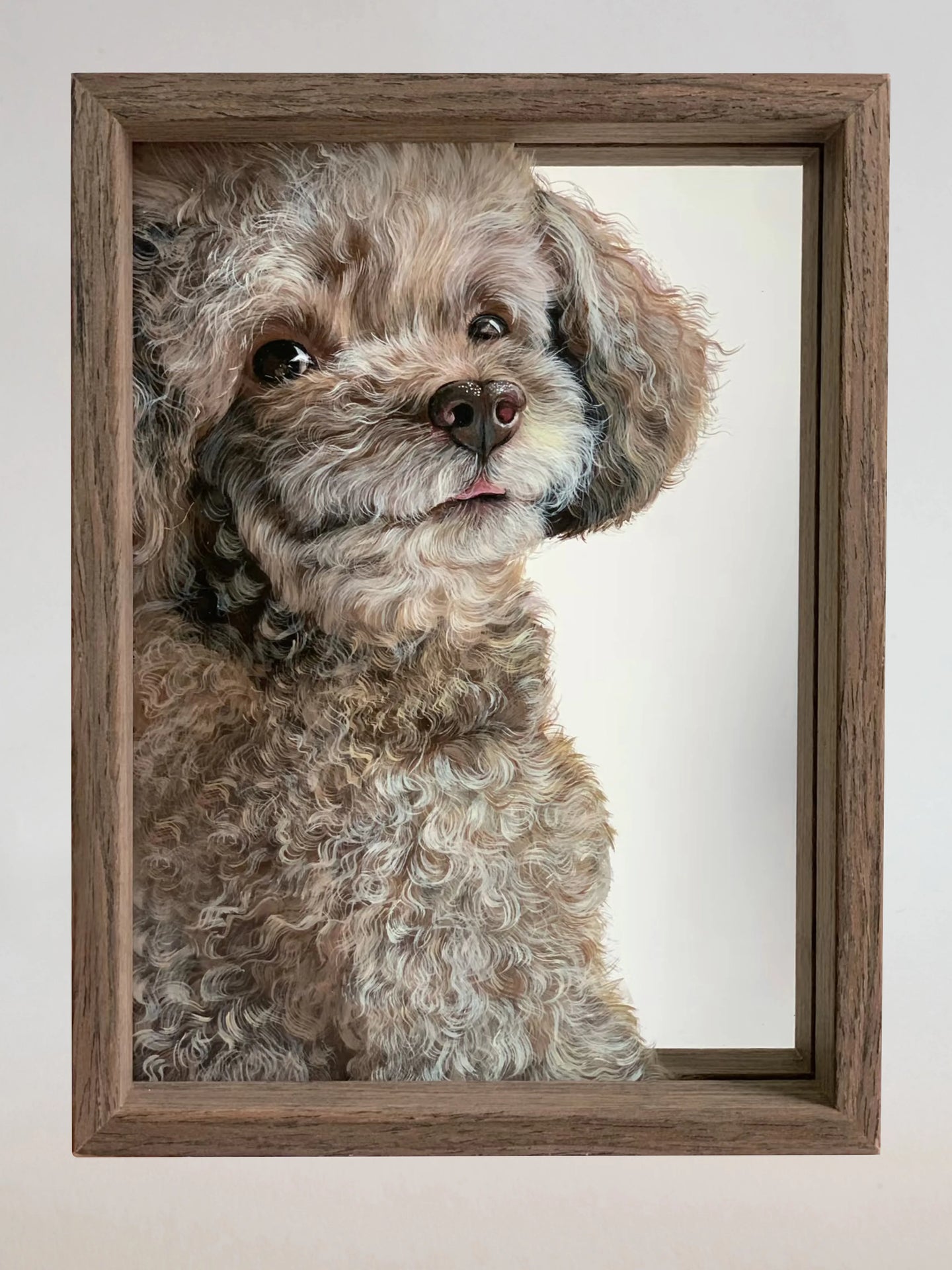
Custom Hand-Painted Pet Portrait With Frame
This option is well suited to buyers who want a polished, display-ready portrait with strong attention to facial details, color, and expression. The official product page describes it as hand-painted on glass and supplied with a frame.
Listed starting price: $169.99
Available listed sizes: 4 × 6 inches through 8 × 12 inches
Customization: Size, pose, full-body requests, multiple pets, and framing options
Best use: Living-room display, office art, anniversary gift, or memorial wall
Choose this format when the face is the most important part of the portrait and you want a traditional piece that already feels finished when it arrives.
View the Framed Portrait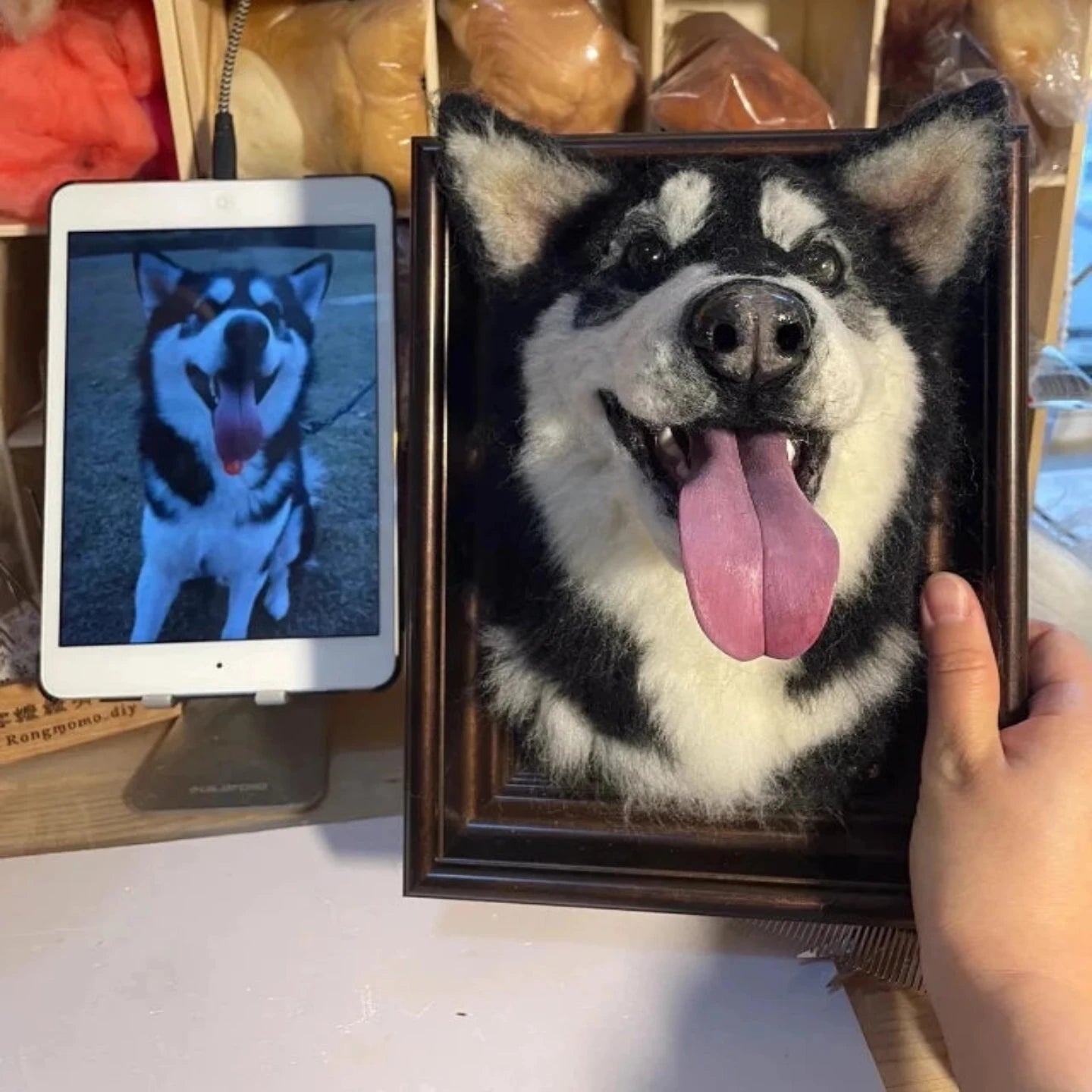
3D Custom Stuffed Animal Clone With Wooden Frame
This framed wool-felt format creates physical depth around the muzzle, ears, cheeks, and coat. The product page lists handmade wool construction, glass eyes, head-only and half-body options, one-to-one customization, and revision support.
Listed starting price: $249.99
Listed frame sizes: 6, 7, 8, 10, 12, and 16 inches
Portrait options: Head only or half body
Materials listed: Wool, glass eyes, and sculpted materials for features such as the nose and ears
Best use: Premium keepsake, memorial display, or highly personal family gift
This is a strong choice for curly, fluffy, double-coated, wire-haired, or long-haired dogs because the raised wool surface can represent coat direction and volume in a way flat artwork cannot.
View the Framed Wool Portrait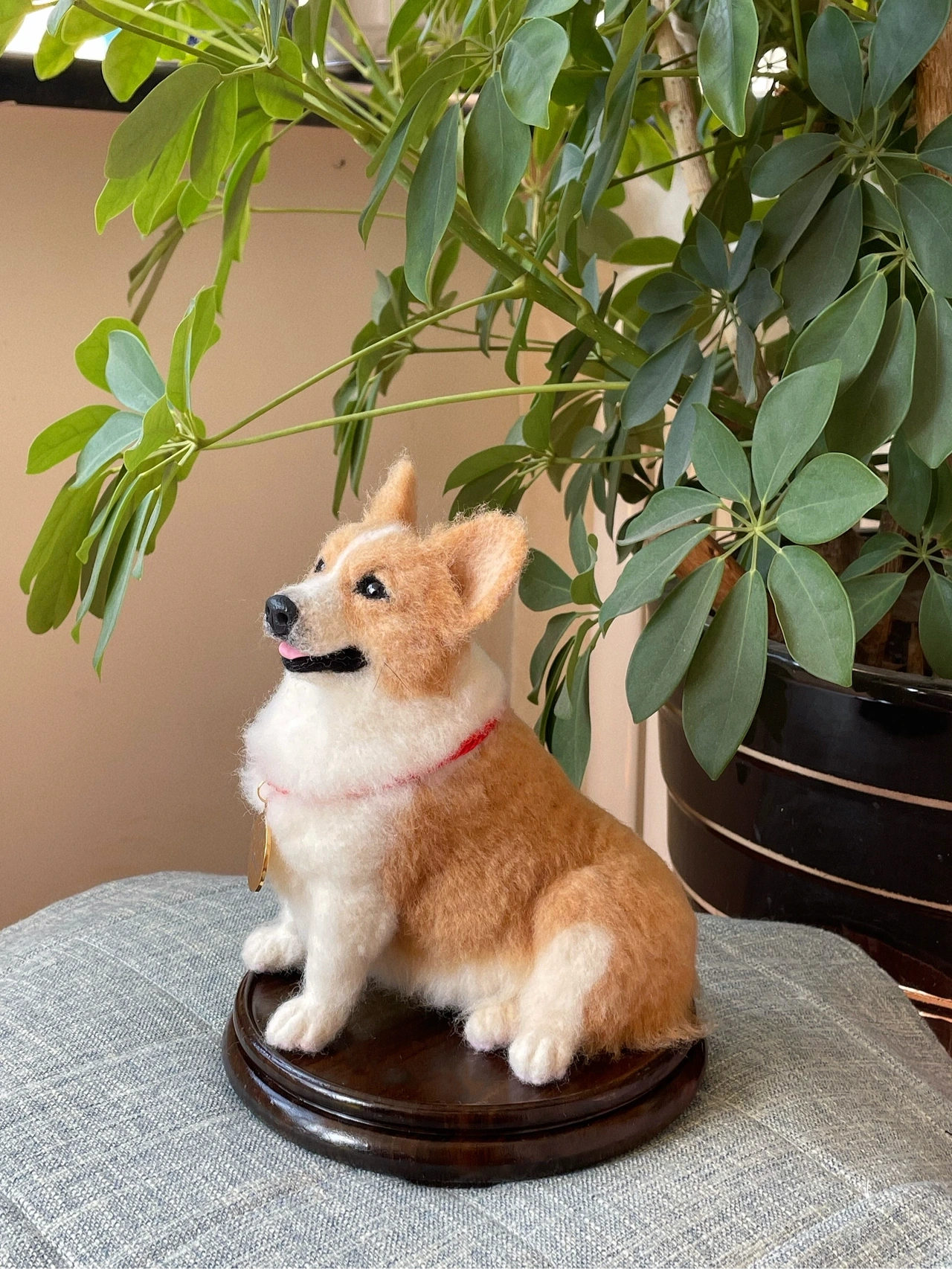
3D Full-Body Custom Stuffed Animal Portrait
A full-body portrait captures more than the face. It can preserve a dog's compact body, long legs, curled tail, wide chest, sitting posture, alert stance, or other recognizable physical traits.
Listed starting price: $499.99
Listed sizes: 6–8 inches through 14–16 inches
Construction: Handmade wool-felt sculpture created from customer photos
Customization: Body shape, posture, coat, facial features, and revision support
Best use: Statement keepsake, milestone gift, or full-body memorial sculpture
Send front, side, rear, sitting, and standing photos for this format. A single face photo cannot accurately communicate leg length, chest width, tail shape, or body proportions.
View the Full-Body Portrait| Product | Listed starting price | Listed size range | Primary realism advantage | Official source |
|---|---|---|---|---|
| Framed hand-painted portrait | $169.99 | 4 × 6 to 8 × 12 inches | Expression, coat color, facial detail, and finished wall display | Product page |
| 3D oil painting on glass | $199.99 | 4 × 6 to 8 × 12 inches | Vivid color, clarity, and dimensional visual effect | Product page |
| Framed wool-felt portrait | $249.99 | 6 to 16 inches | Physical fur texture, muzzle depth, and dimensional face | Product page |
| Full-body wool-felt portrait | $499.99 | 6–8 to 14–16 inches | Complete silhouette, posture, body proportions, and coat volume | Product page |
Source: current PetDecorArt product pages linked in the table. Prices, availability, custom charges, and options may change.
How to Order a Realistic Custom Dog Portrait
Step 1: Decide What “Realistic” Means to You
Some buyers want a near-photographic facial likeness. Others care more about soft fur texture, a familiar head tilt, a favorite sitting pose, or the emotional warmth of a handmade piece. Decide which feature would make you say, “That is exactly my dog.”
Step 2: Choose the Final Display Format
Think about where the portrait will live. A wall portrait, desk display, shelf sculpture, memorial table, and wearable keepsake serve different purposes. PetDecorArt's pet portrait collection allows you to compare framed, dimensional, wearable, and smaller keepsake formats.
Step 3: Select the Main Expression
Do not ask the artist to combine several conflicting expressions without clear instructions. Choose one primary mood: calm, alert, playful, dignified, curious, sleepy, or happy.
Step 4: Upload a Small, Organized Photo Set
Too many unlabelled photos can create confusion. Upload the strongest primary image, then identify what each supporting image is meant to clarify.
- “Use Photo 1 for the face angle and expression.”
- “Use Photo 2 for accurate eye color.”
- “Use Photo 3 for the white chest patch.”
- “Use Photo 4 for the natural tail position.”
Step 5: Write an Identity-First Artist Note
Copyable Order Note Template
Please use Photo 1 as the main pose and expression. The details most important to preserve are the slightly folded right ear, the narrow white stripe between the eyes, the warm brown eye color, and the darker fur around the left side of the muzzle. Please keep the natural head shape and do not enlarge the eyes or shorten the muzzle. Photo 2 shows the most accurate coat color. Photo 3 shows the chest marking. I would like the finished portrait to feel realistic, warm, and natural rather than cartoon-like.
Step 6: Separate Essential Details From Optional Preferences
Essential details include markings, proportions, eye color, ear position, scars, unusual teeth, and expression. Optional preferences include the background, frame color, decorative flowers, text, clothing, or symbolic memorial elements.
Step 7: Review the Preview at Normal Viewing Distance
Zooming in is useful for checking markings, but a portrait must also feel right from several feet away. First ask whether the dog is immediately recognizable. Then inspect the smaller details.
How Dog Coat Type Affects Portrait Realism
Different coats create different artistic challenges. A short-haired dog depends heavily on accurate head structure and highlights. A curly or double-coated dog depends more on layered texture, coat direction, and volume.
| Coat type | Details that create realism | Best photo conditions | Common mistake to avoid | Suitable format |
|---|---|---|---|---|
| Short, smooth coat | Muscle shape, skin folds, facial planes, shine, and subtle color changes | Side lighting soft enough to show contours without harsh shadow | Adding too much fluffy texture | Hand-painted portrait or glass artwork |
| Curly coat | Curl direction, density, muzzle shape, ear volume, and separation around the eyes | Bright, indirect light that keeps individual curls visible | Turning the coat into one soft cloud without structure | Framed wool felt or detailed painting |
| Double coat | Undercoat volume, guard hairs, neck ruff, cheek shape, and color layering | Outdoor shade or window light with visible coat layers | Flattening the ruff or making the silhouette too narrow | Wool-felt portrait or full-body sculpture |
| Wire coat | Eyebrows, beard, uneven hair ends, muzzle texture, and rough coat direction | Three-quarter view with strong detail around the muzzle | Smoothing the coat into soft, uniform fur | Wool felt or textured hand painting |
| Long feathered coat | Ear feathering, chest hair, tail flow, leg fringe, and layered highlights | Background contrast that separates the coat edges | Removing natural asymmetry or making all hair strands equally long | Painting, framed felt, or full-body sculpture |
| Mostly black coat | Cool and warm undertones, reflected light, eye separation, and muzzle outline | Soft daylight with exposure set for the face | Using flat black without visible form or texture | Hand painting or wool felt with detailed reference photos |
| Mostly white coat | Cream, gray, pink, blue, and warm reflected tones within the white fur | Indirect light without overexposure | Painting the entire coat pure white | Painting or dimensional wool felt |
Related technique guide: How to Paint a Dog in Oil: Tips for Realistic Pet Portraits .
How to Choose the Right Dog Portrait Size
Bigger is not automatically more realistic. The right size depends on the number of dogs, portrait crop, amount of coat detail, viewing distance, and available display space.
| Display situation | Useful size direction | Best composition | Planning note |
|---|---|---|---|
| Desk, shelf, or bedside table | Approximately 4 × 6 to 7 × 7 inches | Head or close head-and-shoulders portrait | Keep the background simple so facial details remain clear |
| Small wall or gallery grouping | Approximately 6 × 8 to 8 × 10 inches | Head-and-shoulders or compact full-body pose | Match the frame depth and finish to nearby artwork |
| Living-room focal point | Use one of the larger available options | Larger head portrait, half body, or full body | Allow visual space around the dog's head and ears |
| Two dogs in one portrait | Move up from the smallest size | Balanced head-and-shoulders composition | A very small portrait can compress the faces and reduce detail |
| Detailed full-body sculpture | Choose based on the dog's proportions and desired display impact | Natural sitting, standing, or lying pose | Provide measurements or proportional notes when size accuracy matters |
Available product sizes: framed painting sizes , framed wool portrait sizes , and full-body sculpture sizes .
What to Check Before Approving the Finished Portrait
Review the preview in two passes. The first pass checks emotional recognition. The second checks technical accuracy.
Pass One: Does It Feel Like Your Dog?
- Is the expression familiar?
- Does the head shape look correct before you inspect tiny details?
- Are the ears resting in their usual position?
- Would a family member recognize the dog without seeing the reference photo?
- Does the overall mood match the purpose of the portrait?
Pass Two: Are the Identity Details Correct?
- Eye color and eye spacing
- Nose shape, color, and highlight
- Muzzle length and width
- Coat markings on the forehead, muzzle, chest, and ears
- Folded, upright, uneven, or partially cropped ears
- Natural lip line, tongue position, or visible teeth
- Collar color and tag details, when included
- Body proportions and tail position for full-body work
- Correct name spelling and memorial dates
- Background and frame choices
Request corrections by naming the specific feature and supplying a supporting image. “It does not look right” is difficult to act on. “Please narrow the white forehead stripe and fold the right ear slightly forward, as shown in Photo 2” is much more useful.
Common Mistakes When Ordering a Realistic Dog Portrait
Using One Blurry Screenshot
A screenshot copied from social media may contain too little detail for accurate eyes, whiskers, markings, and coat texture. Locate the original file whenever possible.
Choosing a Cute Photo With Distorted Proportions
Close phone photos can enlarge the nose and shorten the head. Use a more natural eye-level image to confirm proportions.
Asking the Artist to Combine Too Many Conflicting Photos
Combining the head from one photo, ears from another, smile from a third, coat from a fourth, and pose from a fifth can produce an unnatural result. Choose one primary photo and use the others only to clarify details.
Giving Breed Instructions Instead of Dog-Specific Instructions
“Make it look like a Golden Retriever” can encourage generic breed features. Describe the actual dog: narrower face, darker ears, shorter coat, unusually pale nose, one lower ear, or a specific eyebrow marking.
Approving Color on a Screen Set to Maximum Brightness
Screen brightness and color settings can change how the preview appears. Review it on more than one device and compare it with a daylight photo.
Waiting Until the Last Minute
Handmade portraits require design review, production, approval, and shipping. A creation estimate is not the same as a guaranteed delivery date.
Adding Too Many Decorative Elements
Flowers, text, angel wings, toys, landscapes, and complex backgrounds can compete with the dog. For the strongest likeness, keep the visual hierarchy simple: dog first, supporting details second.
Realistic Memorial Portraits
A memorial portrait does not need dramatic symbols to feel meaningful. Often, the most personal approach is to preserve an ordinary expression the family saw every day.
When clear photos are limited, separate what is known from what must be reconstructed. One older photo may provide the expression, while another shows accurate coat color or ear shape. Ask the artist to prioritize the dog's real features rather than “improving” the face into a more perfect or symmetrical version.
Small, familiar details can carry more emotional weight than generic memorial imagery:
- A worn collar or favorite tag
- A slightly crooked lower tooth
- A gray muzzle from later years
- A folded ear
- A favorite blanket color
- A small chest patch
- A calm resting expression
For additional planning help, read Dog Memorial Portrait: How to Choose a Meaningful Tribute .
Can Several Dogs Be Combined Into One Realistic Portrait?
Yes, but the artist needs enough information to make the dogs look as though they belong in the same scene. Photos taken with different camera heights, lighting, and distances can make one dog appear much larger or brighter than another.
Provide These Details for a Multi-Dog Portrait
- Each dog's approximate height or weight
- Which dog should appear on the left, center, or right
- Whether their heads should be shown at their natural relative sizes
- A daylight color reference for every dog
- Separate close-up photos for facial markings
- A note explaining whether they should appear calm, playful, or formal
A wider portrait or larger frame generally gives the artist more room to preserve separate faces. Avoid placing several dogs into the smallest available size when detailed realism is the priority.
How Much Does a Realistic Custom Dog Portrait Cost?
Pricing depends on the medium, physical size, number of dogs, head-only or full-body composition, frame, amount of handmade detail, and requested customization. Based on PetDecorArt's official product pages checked on July 3, 2026, the highlighted realistic options begin at approximately $169.99 for a framed painting, $199.99 for a 3D glass painting, $249.99 for a framed wool portrait, and $499.99 for a full-body wool portrait.
| Cost factor | Why it matters | Questions to ask before ordering |
|---|---|---|
| Portrait size | Larger pieces require more materials, detail work, and production time | Is the listed price for the smallest size? |
| Additional dogs | Each face and body requires separate composition and detail work | What is the extra charge per dog? |
| Full-body design | Requires accurate posture, legs, paws, tail, and body proportions | Is full-body work included or added separately? |
| Dimensional handmade work | Wool-felt pieces are constructed and shaped by hand rather than printed | How many views of the dog should be provided? |
| Frame and display materials | Frame size, finish, glass, base, and packaging affect the total | Is the frame included in the selected option? |
| Rush production | Expedited work may require schedule changes or additional fees | Is the date a creation estimate or a delivered-by guarantee? |
Current prices and options: PetDecorArt Pet Portraits.
Plan for production and shipping separately. Several PetDecorArt custom-product pages state that creation commonly takes around two to four weeks depending on complexity and the current queue. Total delivery can take longer because it also includes consultation, approval, packaging, and transit.
Frequently Asked Questions
What is the most realistic type of custom dog portrait?
A hand-painted portrait usually provides the strongest traditional facial likeness, while a wool-felt portrait provides more realistic physical fur texture and depth. A full-body felt sculpture is the strongest option when posture, tail, body shape, or coat volume is essential to the dog's identity.
Can an artist make a realistic portrait from a bad photo?
Some problems can be corrected with supporting photos, but an artist cannot reliably recover details that are missing from every image. Supply one main pose plus separate photos showing accurate eyes, coat color, ears, markings, and body shape.
How many photos should I send for a custom dog portrait?
Four organized photos are often enough: one primary image, two supporting detail images, and one daylight color reference. Full-body sculptures may require additional front, side, rear, sitting, and standing views.
Should I choose a head portrait or a full-body portrait?
Choose a head portrait when the eyes, expression, ears, and facial markings carry most of the dog's identity. Choose full body when posture, leg length, chest width, tail shape, or overall silhouette is equally important.
Can two dogs from separate photos be placed in one portrait?
Yes. Provide size information for both dogs, clear color references, and instructions about placement. A larger portrait generally gives the artist more room to preserve both faces accurately.
Can I use an old photo for a dog memorial portrait?
Yes. Use the old image for expression and emotional reference, then add any clearer photos that confirm markings, ear shape, coat color, or body proportions. Explain which details come from each photo.
How do I make sure the portrait does not look cartoonish?
State that you want natural proportions, realistic eye size, accurate muzzle length, true coat color, and the original expression. Ask the artist not to enlarge the eyes, shorten the face, exaggerate the smile, or smooth irregular markings.
Are realistic custom dog portraits hand-painted or digitally printed?
Both types exist. Check the product description carefully. PetDecorArt offers hand-painted glass portrait options, handmade wool-felt portraits, and other personalized formats. Do not assume that every product described as “custom art” is physically painted.
How long does a realistic custom dog portrait take?
The schedule depends on medium and complexity. Several PetDecorArt handmade product pages state that custom creation commonly takes around two to four weeks, but consultation, revisions, shipping, holidays, and order volume can extend the total delivery time.
What should I write in the personalization notes?
Identify the primary photo, list the dog's most recognizable features, explain which supporting photos show accurate colors or markings, choose the intended expression, and state anything the artist should not change.
Can realistic dog portraits include a collar, name, or memorial date?
Many custom formats allow additional details, but available options vary by product. Confirm the wording, spelling, collar color, tag shape, and placement before production begins.
What size is best for a realistic dog portrait?
Small sizes work well for a single close-up face. Choose a larger size for multiple dogs, half-body compositions, detailed backgrounds, or full-body poses. The portrait should provide enough space for the dog's eyes, muzzle, ears, and markings to remain distinct.


