
Yes, felting with dog hair is possible. But the real answer most people need is this: some dog hair felts surprisingly well, some barely felts at all, and a lot of DIY frustration comes from using the wrong hair in the wrong way.
If you have a brush full of fluff and you are wondering whether it can become a tiny keepsake, a memorial heart, or a realistic pet sculpture, you do not need vague craft talk. You need a clear plan: what coat type works best, whether you should use pure dog hair or blend it with wool, what to do before you ever touch a felting needle, and when a commissioned keepsake simply makes more sense.
This guide walks through all of that in plain English, with beginner-friendly comparisons, practical project ideas, and a few PetDecorArt options for readers who love the feeling of felted pet art but do not want to gamble on a first DIY attempt.
The short answer
Yes: dog hair can be needle felted, and in some cases wet felted, into small keepsakes and surface details.
Usually better: soft brushings from the undercoat, especially from fluffier double-coated dogs.
Usually worse: short, slick, coarse hair, heavy guard hairs, and random clipper clippings.
Best beginner move: use dog hair as a visible outer layer or blend it with wool instead of trying to build an entire piece from pure dog hair.
| Question | Practical answer | What to do |
|---|---|---|
| Can I felt dog hair at all? | Yes, but success depends heavily on fiber type, length, softness, and whether you are using a wool base. | Always make a small test swatch before starting a real keepsake. |
| Can I use only dog hair? | Sometimes, but it is less predictable and often sheds more. | For your first project, use wool for the core and dog hair for the visible layer. |
| Are brushings better than clippings? | Yes. Brushings usually contain softer undercoat and fewer hard cut ends. | Save clean brushings in a paper bag, not packed into plastic. |
| What is the easiest first project? | A small heart, round keepsake, flat patch, or framed accent. | Avoid a full realistic pet sculpture as your first dog-hair-only project. |
Why some dog hair felts and some does not
Felting works because animal fibers tangle, compress, and lock together. Wool is the easiest material because its surface structure is especially good at grabbing onto neighboring fibers. That is why classic felt projects almost always start with wool.
Dog hair is more complicated. The soft, downy undercoat can behave beautifully in some projects, while stiff outer guard hairs often fight the process. That is why two people can both say, “I tried felting dog hair,” and one gets a sweet keepsake while the other gets a fuzzy mess that keeps shedding.
The biggest mindset shift is this: do not treat all dog hair as one material. Think of it as a mixed bag of fibers. Some of that bag is useful. Some of it should stay out of the project.
What this means in real life
- If your dog has a fluffy seasonal undercoat, you have a much better starting point.
- If the saved hair came from a haircut, not brushing, expect more coarse pieces and more poking fibers.
- If your goal is a polished memorial piece, blending with wool usually gives you a neater finish and less heartbreak.
Which dog hair works best for felting?
The hair that usually behaves best is the soft undercoat from brushing. Think fluffy, airy, cloud-like fiber rather than shiny, wiry strands. That does not mean only northern or double-coated dogs can work. Curly or mixed coats can sometimes felt well too. It just means you need to judge the feel of the fiber, not the dog’s cuteness.
| Coat type or saved fiber | Chance of felting well | Why | Best use |
|---|---|---|---|
| Soft brushings from a fluffy undercoat | High | Usually contains the downy fiber that tangles more easily. | Mini keepsakes, outer layer on sculptures, blended batts |
| Longer soft hair from the neck, sides, or back | Medium to high | Often softer and easier to lay down neatly. | Surface coat, framed pieces, texture details |
| Curly or crimped brushings | Medium to high | Some curly fibers grip better than sleek straight hairs. | Decorative texture, small ornaments, keepsake hearts |
| Heavy guard hair mix | Low to medium | Coarse fibers can resist felting and may stick out. | Blend sparingly or remove as much as possible |
| Short slick coat clippings | Low | Short straight fibers and cut ends are harder to control. | Use only as sentimental filler, not main surface fiber |
| Dirty, oily, damp, or matted saved hair | Unreliable | Poor prep makes good fiber behave badly. | Clean, dry, and test before committing |
One of the most useful beginner habits is sorting the saved hair into piles before you start: soft fluff, usable mid-range fiber, and coarse throwaway stuff. That one step can completely change your result.
Pure dog hair vs. blending with wool
People usually ask whether they can make a full piece from their dog’s hair alone. The honest answer is yes, sometimes. The better question is whether they should. For most beginners, a blend gives a cleaner result and a smoother learning curve.
| Approach | Pros | Cons | Best for |
|---|---|---|---|
| Pure dog hair | Most sentimental; fully made from your dog’s fiber; special for memorial use | Less predictable, often less stable, more shedding risk, harder for beginners | Tiny hearts, mementos, symbolic inserts, experimental swatches |
| Dog hair over a wool core | Better structure; easier shaping; lets your dog’s hair stay visible | Not 100% dog hair | Small sculptures, ornaments, head studies, framed portraits |
| Dog hair blended with wool | Easier felting, less shedding, smoother surface, more forgiving | Color may soften or shift depending on blend ratio | Beginner projects, patches, memorial hearts, decorative keepsakes |
If your goal is emotional meaning, a blend is not a compromise. It is often the smartest way to get a keepsake that actually lasts.
How to collect and store dog hair the right way
Bad storage ruins good fiber. If the hair gets damp, sweaty, oily, compressed, or mixed with debris, it becomes harder to prepare and harder to felt. Save it like a craft material, not like household lint.
- Use brushings when possible. Brushings tend to give you softer, more usable fiber than cut hair from a clipper trim.
- Pick out obvious junk. Toss hair with dirt, leaf bits, dandruff clumps, or sharp debris.
- Keep only the best fiber. The soft fluffy stuff is worth saving. A smaller bag of good fiber beats a huge bag of scratchy waste.
- Store it dry in something breathable. A paper bag, cardboard box, or clean pillowcase is better than sealing it tightly in plastic.
- Label the bag. Write the dog’s name, coat color, and date. If you have multiple pets, this matters more than you think.
A simple rule
If the saved hair feels like something you would happily press against your cheek, it is probably in your “use first” pile. If it feels prickly, wiry, greasy, or crispy, it should not become the star of your felt project.
A beginner method that gives you the best chance of success
If you are brand new, do not start with a full-body replica. Start small and prove the fiber first. This method is realistic for beginners and gives sentimental results without requiring master-level shaping skills.
- Sort your fiber. Separate soft undercoat from coarse guard hairs.
- Clean lightly if needed. If the hair is oily or dirty, wash gently and let it dry fully before doing anything else.
- Open the fiber. Pull it apart with your fingers or card it lightly so it is airy, not clumped.
- Make a test swatch first. Needle felt a small coin-sized sample using only dog hair, then another using dog hair over wool. Compare them.
- Use wool for structure. Build a small base shape from wool if you want easier control.
- Add dog hair in thin layers. Thin layers grip better than thick lumps and look more natural.
- Stop before overworking it. Repeated stabbing can flatten the personality out of the fiber, especially on visible surface areas.
- Finish with a gentle cleanup. Trim or tuck the worst flyaways, but do not chase perfection until the piece loses its softness.
For most people, the first successful project is not a museum-quality dog sculpture. It is a small object with emotional weight: a heart, a tiny face medallion, a framed lock of fur integrated into wool, or a symbolic accent hidden inside a bigger piece.
Common mistakes that ruin the result
| Mistake | What happens | Better move |
|---|---|---|
| Using unsorted brush waste straight from the brush | The piece looks rough and sheds more than expected. | Sort out the soft usable fiber first. |
| Using clipper clippings as the main material | Cut ends and coarse pieces fight the felting process. | Use brushings or blend clippings lightly into a wool base. |
| Trying to make a full sculpture from pure dog hair on day one | The structure collapses or stays fuzzy and unstable. | Start with a heart, patch, ornament, or wool-core piece. |
| Saving hair in packed plastic for months | The fiber can smell, mat, or feel less pleasant to handle. | Use breathable storage and keep the hair dry. |
| Assuming all coats behave the same | Your expectations outrun what the fiber can do. | Test each dog’s hair separately before planning the final design. |
| Making the dog hair layer too thick | The outer layer can stay loose or slough off. | Apply thin layers and build slowly. |
Best project types for dog hair felting
If your dog’s hair is precious because it is the last saved fur you have, choose a project that respects the material instead of wasting it on a frustrating experiment.
| Project type | Difficulty | Good for pure dog hair? | Why it works |
|---|---|---|---|
| Memorial heart | Easy | Yes, sometimes | Small shape, forgiving form, meaningful even if the texture stays soft. |
| Flat patch or framed accent | Easy | Yes | You do not need structural perfection for a flat display piece. |
| Ornament or keychain charm | Medium | Better as a blend | Needs more durability because it will be handled or moved. |
| Mini face medallion | Medium | Better with wool support | Fine detail is easier when the base is stable. |
| Full realistic pet sculpture | Hard | Usually not for beginners | Requires shaping control, layering skill, and smart fiber selection. |
| Pillow or large soft keepsake | Medium | Possible, but variable | Works better when the hair is used as a surface or sentimental filler rather than the only structural fiber. |
If you are making something after pet loss, there is no prize for difficulty. Choose the project that gives you the best emotional result with the lowest chance of wasting the saved fur.
PetDecorArt picks if you want the felted look without DIY stress
Sometimes the right answer is not “do it yourself.” Sometimes the right answer is “I want something that looks beautiful, feels personal, and does not depend on my first-ever felting attempt.” That is where PetDecorArt fits naturally into this conversation.
If you love the warmth of wool, texture, and realistic pet keepsakes, these options line up especially well with the reader searching this topic.
Custom Full-Body Wool Felt Pet Portrait
This is the closest match for readers who are really asking, “Can dog hair become art?” but want the finished piece to look polished. PetDecorArt’s full-body custom stuffed animal portraits are handmade, needle felted, built from photos, and offered in multiple sizes. The official product page lists a starting price of $499.99 for the 6–8 inch size, with larger size options available up to 14–16 inches.
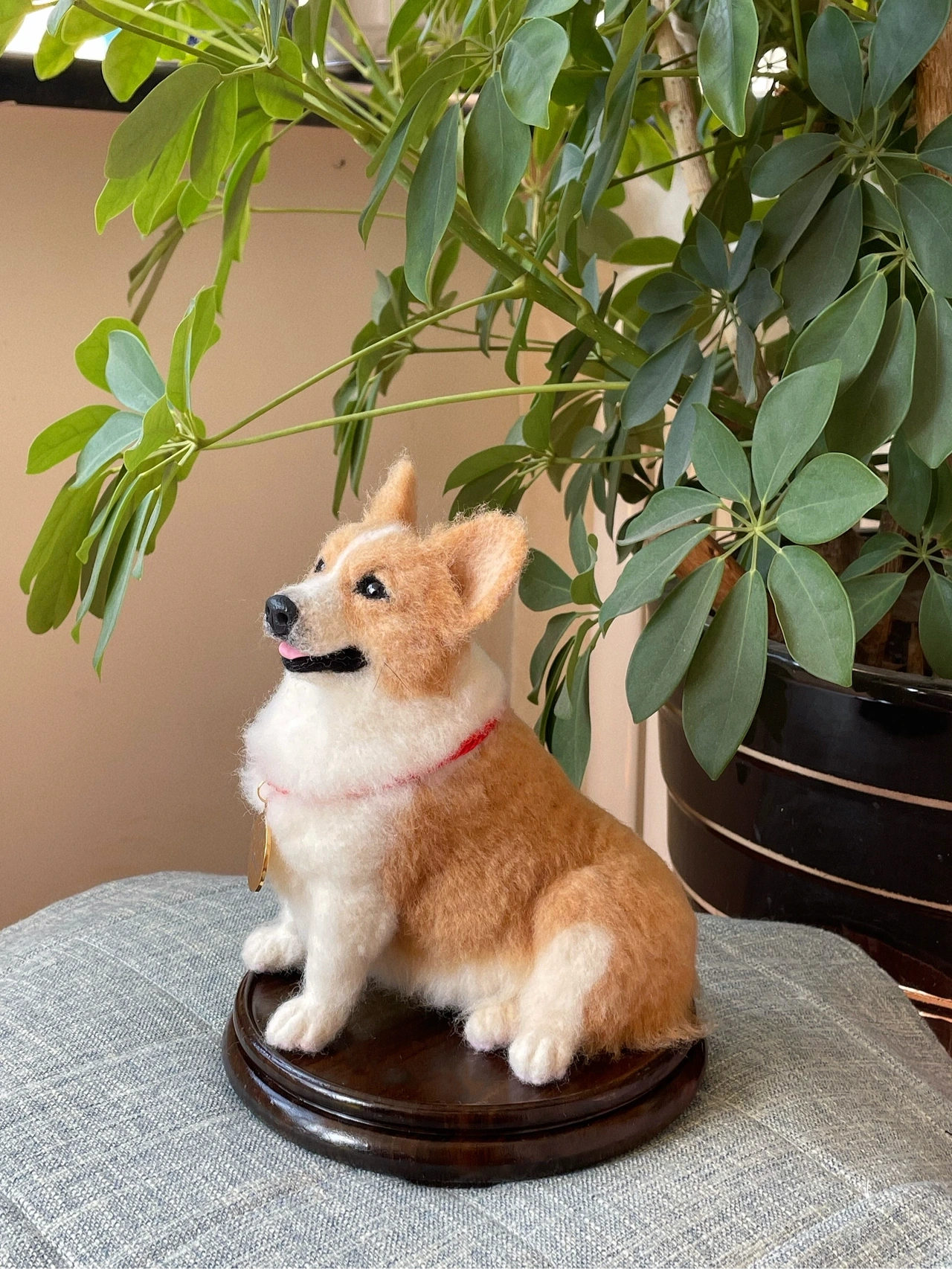
This is a strong fit for memorial gifting, display shelves, and people who care more about lifelike presence than “I made it myself.” If that sounds like you, this also pairs well with PetDecorArt’s guide on how to choose a dog memorial portrait.
Mini Felt Pet Keychain & Bag Charm
If your original dog-hair idea was less about a big project and more about carrying a tiny reminder with you, this option makes a lot of sense. PetDecorArt’s mini stuffed animal pet clone keychain is listed at $59.90 and described as a pocket-sized felt keepsake at about 1.5 inches.

This is especially good for readers who have only a little saved fur, are not ready for a larger memorial piece, or simply love the texture and warmth of felted pet art in miniature form.
Custom Pet Oil Painting on Glass
Not everyone who searches for dog hair felting wants a fuzzy, tactile object. Some people want a tribute that still feels handmade but looks cleaner, brighter, and easier to display long term. PetDecorArt’s custom oil painting on glass starts at $199.99, with the product page listing sizes beginning at 4" × 6".

This is the smart alternative when the saved hair is too coarse, too short, or too limited for a felted project. If you are still deciding what format fits best, PetDecorArt’s article on how to order a custom pet portrait is a useful next read.
When DIY is the right move, and when it is not
| If this sounds like you… | Better choice | Why |
|---|---|---|
| “I have a lot of soft brushings and want to experiment.” | DIY felt swatch or mini keepsake | You have enough material to learn without risking your only saved fur. |
| “I only have one small bag and it is emotionally important.” | Very small DIY piece or commissioned artwork | This lowers the chance of wasting irreplaceable material. |
| “I want something that looks professionally lifelike.” | Commissioned wool portrait | Realistic form, face structure, and coat detail take time and practice. |
| “I like the memorial idea, but I do not have usable hair saved.” | Custom photo-based art | You can still get a handmade tribute without relying on the coat fiber. |
For readers in the memorial phase, you may also like PetDecorArt’s DIY pet memorial ideas if you want a wider mix of handmade tribute options around felting, framed art, and keepsakes.
Reference table and source links
This section is here for readers who want to check the craft basis behind the advice without digging through forum noise.
| What the source supports | Why it matters in this article | Source link |
|---|---|---|
| Wool felts because of moisture, friction, pressure, and microscopic scales that help fibers hook together. | Explains why wool is easier than dog hair and why blends are often smarter for beginners. | Ingenium: From Sheep to Sweater |
| Dog hair for fiber work is usually better from brushings than clippings; the finer undercoat is preferred over guard hairs. | Supports the article’s advice on what to save and why clippings often disappoint. | Craft Me Happy: Preparing and Spinning Dog Hair |
| Different dogs and coat sections behave differently, and short dog hair can shed out more easily. | Supports the “test first” advice and the warning that not all dog hair performs equally well. | Felting and Fiber Studio: Dog Hair Felting |
| Dog hair can be used for yarn and felt projects, and undercoat from fluffier dogs is easier to work with. | Useful for explaining why some breeds and coat types are more beginner-friendly. | ShowSight: Putting Dog Hair to Good Use |
| PetDecorArt’s official product pages list pricing, size ranges, timelines, and handmade positioning for the featured keepsakes. | Used for the product recommendations and the article’s internal shopping references. | Full-Body Wool Felt Portrait · Mini Felt Keychain · Oil Painting on Glass |
FAQ
Can you really needle felt dog hair?
Yes. Needle felting with dog hair is possible, especially when the saved fiber includes soft undercoat. It is usually easier and more reliable when dog hair is used over a wool core or blended with wool rather than used completely on its own.
Does dog hair felt as well as sheep’s wool?
Usually no. Sheep’s wool is more consistent and easier to felt, which is why many successful dog-hair projects still use wool for structure. Dog hair can absolutely add sentimental value and realistic color, but it is less predictable.
Is brush hair better than haircut clippings for felting?
Yes. Brushings are usually better because they contain more soft, usable undercoat and fewer harsh cut ends. Random clippings often include coarse guard hair and short pieces that are harder to control.
What if my dog has short, sleek hair?
You can still try a small test swatch, but expectations should be lower. Short slick coats are usually harder to felt neatly. In that case, it often makes more sense to use the saved hair in a tiny symbolic insert and rely on wool for the visible body of the project.
Should I wash dog hair before felting it?
If it is oily, dirty, or smells strong, yes—gently. The key is letting it dry completely before working with it. Damp or partially dried fiber is much harder to judge and can behave badly in storage.
What is the easiest first project using dog hair?
A small heart, flat patch, framed keepsake, or tiny ornament is usually the best first project. These formats let you focus on the fiber without asking you to master advanced sculpture right away.
Can I make a realistic pet replica from my dog’s hair alone?
Sometimes, but it is not the easiest path. A realistic replica takes skill even with ideal wool. For most people, using a wool core or commissioning a handcrafted felt portrait is the safer route if the finished look matters a lot.
What if I want the warm, handmade look but do not want to DIY?
That is exactly where photo-based wool keepsakes and custom felt portraits become useful. PetDecorArt’s full-body wool felt portraits and mini felt keepsakes are natural alternatives when you want the emotional feel of felting without the trial-and-error stage.


