
A good handmade pet portrait should preserve more than coat color. It should capture the slightly uneven ears, the familiar look around the eyes, the shape of the muzzle, the way the pet sits, and the small markings family members recognize immediately.
That is why turning a photo into a handmade portrait involves more than uploading an image and applying an effect. PetDecorArt reviews the reference photos, confirms the details with the customer, assigns the work to an artist, builds the portrait in the selected material, and shares progress or preview images before completing the order.
The short answer:
PetDecorArt turns a pet photo into handmade art through a collaborative process. You choose the format, upload a clear primary photo and supporting images, and explain the features that matter. The order is reviewed and assigned to an artist, who interprets the pet in wool, paint, or thread. Preview images are then shared so important details can be checked before the piece is finished, packaged, and shipped.
PetDecorArt describes its work as artist-made rather than generated from templates or automated filters. The exact crafting method changes with the product: wool portraits are built dimensionally, paintings are created layer by layer, and embroidered portraits translate the pet into thousands of stitches.
The Complete PetDecorArt Photo-to-Portrait Process
PetDecorArt’s official process can be understood as six practical stages. Some stages happen behind the scenes, but each one affects how closely the final piece resembles the pet.
| Stage | What happens | What the customer should do | Official source |
|---|---|---|---|
| 1. Product and photo selection | You select the portrait format, size, pose option, garment, or other available customization and upload the reference photo. | Choose the product before choosing the final reference photo because each format needs different visual information. | Ordering guide |
| 2. Order review | The submitted preferences and images are reviewed, and the project is assigned to an appropriate designer or artist. | Use one photo as the clearly identified primary reference and explain the purpose of any additional images. | Full-body portrait process |
| 3. One-to-one confirmation | The assigned designer may contact you by email to confirm the pose, markings, colors, accessories, or other important details. | Monitor the email used at checkout and answer questions promptly to avoid delaying production. | PetDecorArt process |
| 4. Handmade creation | The artist studies the references and recreates the pet by hand in wool, paint, or embroidery. | Allow the artist to interpret the photo in the chosen material rather than expecting every photographic detail to transfer literally. | Craftsmanship details |
| 5. Preview and revisions | Progress or finished-piece images are shared so the likeness and requested details can be checked. | Review identity-defining details first: face shape, eyes, markings, ears, coat color, and posture. | Framed wool portrait page |
| 6. Finishing and delivery | After approval, the piece receives its final finishing, quality review, packaging, and shipment. | Confirm the delivery address and remember that the production estimate is separate from transit time. | Quality and delivery process |
Why the process starts with the product:
A close-up face photo may be ideal for a two-inch embroidered portrait but insufficient for a full-body wool sculpture. A full-body photo may show posture beautifully while hiding the eyes and facial markings needed for a framed head portrait. Choosing the format first tells you which photo should lead the project.
How a Pet Photo Becomes an Artist’s Brief
The artist does not treat every visible part of a photo as equally important. A reference image may contain a leash, furniture, shadows, a hand, bright grass reflecting into the coat, or a phone-camera effect that changes the pet’s proportions. Those elements are part of the photograph, but they may not be part of the pet.
The useful information is the pet’s visual identity: face geometry, eye placement, muzzle length, ear position, markings, coat direction, posture, and familiar expression. Your order notes help the artist separate those identity details from temporary or unwanted details in the image.
One primary photo should control the composition
If you upload several photos, identify one as the main reference. That image should control the angle, expression, and pose. Additional photos should answer specific questions rather than compete with it.
Example:
Use Photo 1 for the face angle and expression.
Use Photo 2 only for the correct warm-brown coat color.
Photo 3 shows the white chest marking that is hidden in Photo 1.
Please remove the leash and keep the slightly folded right ear.
This approach prevents a common problem: the artist sees one ear position in the first photo, a different coat color in the second, and an entirely different life stage in the third without knowing which version you want preserved.
What Photos Should You Upload?
You do not need professional photography. A clear smartphone photo can be an excellent reference when it shows the pet naturally and preserves accurate color. What matters is whether each image contributes useful information.
| Photo role | What it should show | What it controls | Most useful for |
|---|---|---|---|
| Primary portrait reference | Sharp eyes, natural expression, clear face shape, and the angle you want in the final piece | Composition, head angle, expression, and overall likeness | Every portrait format |
| Coat-color reference | The pet in neutral daylight without heavy filters or warm indoor lighting | Correct light, mid-tone, and dark fur colors | Painting, wool felting, and embroidery |
| Marking reference | The opposite side of the face or body, chest patch, paws, tail, or hidden spots | Asymmetrical markings that cannot be seen in the main photo | Half-body and full-body work |
| Posture reference | A complete, uncropped view of the pet sitting, standing, or lying in a familiar pose | Body proportions, paw placement, tail position, and stance | Full-body wool portraits |
| Accessory reference | A clear image of a meaningful collar, tag, bandana, or toy | Optional personal details that may not appear clearly in the main photo | Gifts and memorial pieces |
The 60-second reference photo test
- Open the photo at full size rather than viewing only the thumbnail.
- Zoom in on both eyes. If they become a blocky blur, find a sharper option.
- Check whether the ears, muzzle, and outer edge of the head are fully visible.
- Compare the displayed coat color with how the pet looks in daylight.
- Ask whether the expression feels typical of the pet.
- For full-body art, confirm that no paws, tail, or body edges are cropped out.
Use your most recognizable photo, not automatically your prettiest photo.
A studio-style image may be sharp but emotionally unfamiliar. A simpler phone photo can be a better reference if it captures the head tilt, sleepy eyes, alert ears, or sitting posture everyone associates with the pet.
How PetDecorArt Artists Preserve a Pet’s Likeness
More detail does not always produce more likeness. A portrait can contain hundreds of individual fur marks and still feel wrong if the eyes are too far apart or the muzzle is too short. Recognition usually comes from a small hierarchy of features.
| Priority | Identity detail | Why it matters | What to mention in your notes |
|---|---|---|---|
| 1 | Face and body proportions | The width of the head, muzzle length, eye spacing, and body shape establish the pet’s basic identity. | Long muzzle, broad forehead, compact body, unusually large ears, or other defining proportions |
| 2 | Eyes and expression | Small changes to eye shape, direction, or openness can change the pet’s entire expression. | Eye color, one eye slightly smaller, alert expression, sleepy look, or natural eye size |
| 3 | Distinctive markings | Forehead stripes, eyebrow spots, white paws, chest patches, and muzzle markings make similar animals easy to distinguish. | Which markings must be retained and which photo shows them most accurately |
| 4 | Ears, tail, and posture | A folded ear, curled tail, or proud sitting pose often carries more personality than extra background decoration. | Which ear tilts, where the tail rests, and the pose that feels most familiar |
| 5 | Coat color and texture | Correct undertones and fur direction help the piece feel natural rather than generically brown, gray, white, or black. | The image with the truest color and whether the coat is wiry, curly, silky, fluffy, or short |
| 6 | Accessories | A collar or bandana can deepen recognition, but it should not distract from the pet’s face and shape. | Keep, remove, or replace the visible accessory |
PetDecorArt identifies artists working across different disciplines, including needle felting, glass painting, and hand embroidery. The chosen artist translates the same identity hierarchy into a different physical language: wool fibers, painted layers, or thread.
How the Handmade Process Changes by Material
“Handmade pet portrait” is not one production method. Each medium preserves different parts of the reference photo and has different limits. Understanding those differences makes it easier to choose the right format and judge the preview fairly.
Needle-felted wool portraits: building shape and texture
A needle-felted portrait turns a flat photograph into a dimensional form. The artist first studies the head or body proportions, pose, markings, and direction of the coat. Wool is then shaped and layered to establish volume before finer fibers and small features are added.
PetDecorArt’s full-body listing describes the portrait as needle felted strand by strand. Its listed construction includes wool for the body, glass eyes, and sculpted materials such as resin, clay, or wax for selected facial and body details. This combination allows the artist to work on both soft coat texture and defined features such as the eyes, nose, ears, paws, tongue, or teeth.
Wool is especially effective when the pet’s identity depends on coat volume, a recognizable ear shape, a curled tail, or a familiar sitting posture.
Hand-painted portraits: building color and depth in layers
In a hand-painted portrait, the artist studies the source photo and builds the pet’s shape, color, expression, and coat details through painted layers. This gives the artist room to soften distracting photo backgrounds, control contrast, and emphasize the facial details that carry recognition.
PetDecorArt states that its painted portraits are created by skilled artists layer by layer rather than produced with a digital filter. The framed product listing presents multiple size options and is intended to arrive as a display-ready piece.
Painted work is a strong choice when you want a recognizable portrait with a traditional, finished presentation but do not need the physical volume of a wool sculpture.
Hand embroidery: translating a photo into stitchable detail
Embroidery cannot reproduce every pixel of a photograph, especially within a small chest placement. The artist must identify the most recognizable shapes, markings, color boundaries, and expression, then translate those features into thread.
PetDecorArt’s hand-embroidered T-shirt offers a two-inch head portrait or a 3.5-inch classic portrait. Thousands of stitches are used to recreate the selected features on a 100% cotton garment. Because the portrait area is compact, a clear, face-forward photo and strong contrast between the pet and garment color are especially helpful.
Embroidery works best when you want a practical portrait that can be worn regularly rather than displayed only at home.
| Format | Best-preserved details | Best reference photo | Main tradeoff |
|---|---|---|---|
| Framed needle-felted wool | Fur texture, facial volume, eye depth, ear shape, and a tactile handmade appearance | Sharp face or chest-up image plus side-marking references | More labor-intensive and usually more expensive than a flat or wearable portrait |
| Full-body wool portrait | Posture, body shape, paws, tail position, coat texture, and overall physical presence | Uncropped full-body photo plus close-ups of the face and markings | Requires more complete photo coverage and a larger budget |
| Framed hand-painted portrait | Expression, coat color, eye detail, facial markings, and a polished composition | Well-lit face or chest-up portrait at the desired angle | Does not have the touchable volume of a 3D wool portrait |
| Hand-embroidered portrait | Silhouette, key facial features, bold markings, and a recognizable small-scale likeness | Simple, sharp photo with clear feature boundaries | The small stitch area cannot preserve every fine photographic detail |
How to Review Your Pet Portrait Preview
PetDecorArt states that preview or progress photos are provided so customers can request reasonable adjustments before final delivery. The most useful feedback is specific, visual, and prioritized.
Check the preview in this order
- Silhouette and proportions: Is the head too round, the muzzle too short, or the body too tall?
- Eyes and expression: Do the eye shape, spacing, color, and direction feel right?
- Markings: Are the forehead stripe, muzzle patch, paws, chest, and eyebrows placed correctly?
- Ears, tail, and pose: Does the portrait preserve the familiar tilt, fold, curl, or stance?
- Coat color: Is the overall color correct, or has indoor lighting in the source photo made it too yellow or red?
- Accessories and text: Check the collar, tag, background, pet name, dates, or memorial wording last.
| Vague feedback | More useful feedback |
|---|---|
| “It doesn’t look enough like her.” | “Her muzzle should be slightly longer and narrower. Photo 1 shows the shape most accurately.” |
| “The color is wrong.” | “Her coat is a cooler gray, not warm brown. Please use Photo 3 for color.” |
| “Can you fix the ears?” | “Her right ear folds forward at the tip, while the left ear stays upright.” |
| “Make the face cuter.” | “Please keep her natural eye size and soften the mouth without shortening the muzzle.” |
| “Something is missing.” | “Please add the narrow white stripe between the eyes and the small white patch under the chin.” |
Copyable preview feedback:
Thank you for the preview. The overall pose looks right. Before approval, please make the muzzle slightly longer, keep the right ear folded at the tip, and add the small white patch below the chin. Photo 1 is the best shape reference, while Photo 2 shows the correct coat color. The collar and background can remain as shown.
How Long Does a Handmade Pet Portrait Take?
PetDecorArt’s official pages state that most handmade pieces take approximately two to four weeks to complete, depending on complexity, revisions, and the current production queue. Larger oil or 3D glass artworks may take up to six weeks. The embroidered T-shirt listing gives a production estimate of approximately 15–30 days.
These are production estimates, not guaranteed arrival dates. Preview response time, requested revisions, seasonal order volume, and shipping all affect the final delivery date.
| Portrait type | Officially listed guidance | What may add time | Source |
|---|---|---|---|
| Framed needle-felted portrait | About 2–4 weeks, depending on complexity and queue | Half-body format, larger frame, detailed markings, revisions, or special material requests | Official listing |
| Full-body wool portrait | About 2–4 weeks on average | Larger size, complicated posture, long or patterned coats, and additional revisions | Official listing |
| Framed hand-painted portrait | About 2–4 weeks on average | Multiple pets, larger artwork, complex composition, or revision requests | Official listing |
| Hand-embroidered T-shirt | Approximately 15–30 days | Design confirmation, portrait complexity, production queue, and shipping destination | Official listing |
| Larger oil or 3D glass artwork | May require up to 6 weeks | Scale, material, composition, revisions, and current workload | PetDecorArt FAQ |
Ordering for a birthday or holiday?
Allow time for production, your preview response, possible revisions, and shipping. If the date is firm, contact PetDecorArt before ordering rather than assuming the shortest production estimate will apply.
Which PetDecorArt Portrait Format Should You Choose?
The right product depends on what you want the portrait to preserve and where it will live. The following prices and options were checked on July 13, 2026. Current pricing, availability, variants, and delivery estimates can change, so confirm the selected product page before checkout.
| Product | Listed starting price | Verified options | Best for | Official source |
|---|---|---|---|---|
| 3D Custom Stuffed Animal Clone with Wooden Frame | $249.99 | Head-only or half-body; frame sizes from 6 to 16 inches | Tactile display pieces and memorial portraits | Product page |
| Custom Hand-Painted Pet Portrait with Frame | $169.99 | Sizes from 4 × 6 to 8 × 12 inches; framed, photo-based artwork | Traditional, gift-ready display | Product page |
| Custom Hand-Embroidered Pet Portrait T-Shirt | $49.98 | 100% cotton; 2-inch or 3.5-inch portrait; sizes S–3XL; eight listed colors | Wearable gifts and everyday remembrance | Product page |
| Full-Body 3D Custom Stuffed Animal Portrait | $499.99 | Sizes from 6–8 inches through 14–16 inches; full-body wool design | Preserving posture, body shape, coat texture, and physical presence | Product page |
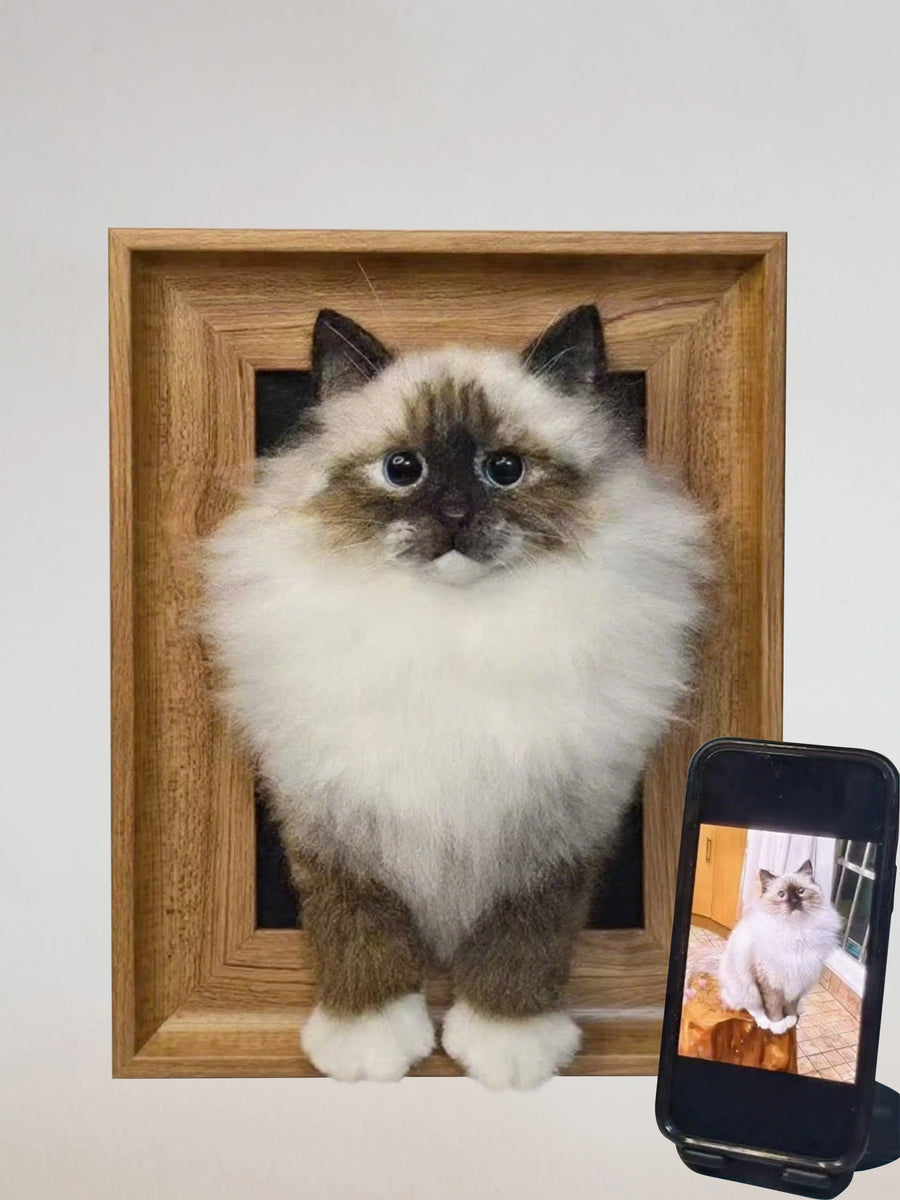
Best for a dimensional framed keepsake
Choose the framed needle-felted portrait when the pet’s face, coat texture, and expression matter most but you still want a piece that is easy to display. The listing offers head-only and half-body options, with frame sizes ranging from 6 to 16 inches.
PetDecorArt lists premium wool felt, one-to-one customization, preview confirmation, and the possibility of incorporating real whiskers or fur. Contact support before ordering if you want to include personal material.
View the Framed Wool Portrait
Best for a polished, display-ready gift
This is the most straightforward option when you want a recognizable handmade portrait that already has a finished presentation. The official listing describes it as hand-painted, framed, photo-based, and available in sizes from 4 × 6 through 8 × 12 inches.
It is a strong fit for birthdays, adoption anniversaries, memorial displays, or recipients who prefer traditional art over a sculptural or wearable keepsake.
View the Framed Hand-Painted Portrait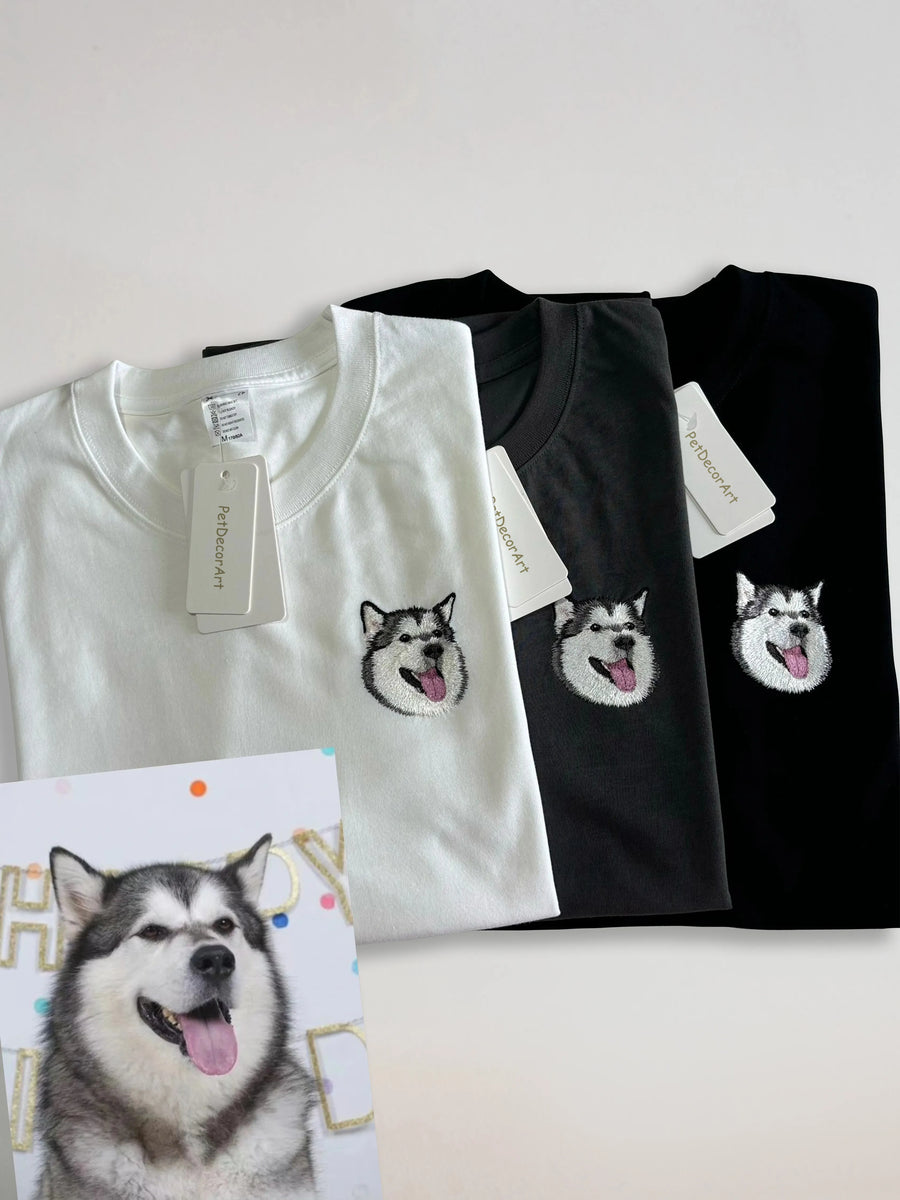
Best for an affordable portrait you can wear
The hand-embroidered T-shirt is the most accessible of these featured options. The official listing gives a starting price of $49.98, 100% cotton construction, sizes from S through 3XL, eight listed garment colors, and a choice between a two-inch head portrait and a 3.5-inch classic design.
Choose a garment color that contrasts with the pet’s coat. Light garments usually give black and dark-brown pets clearer separation, while darker garments can help white, cream, and pale-gray coats stand out.
View the Hand-Embroidered T-Shirt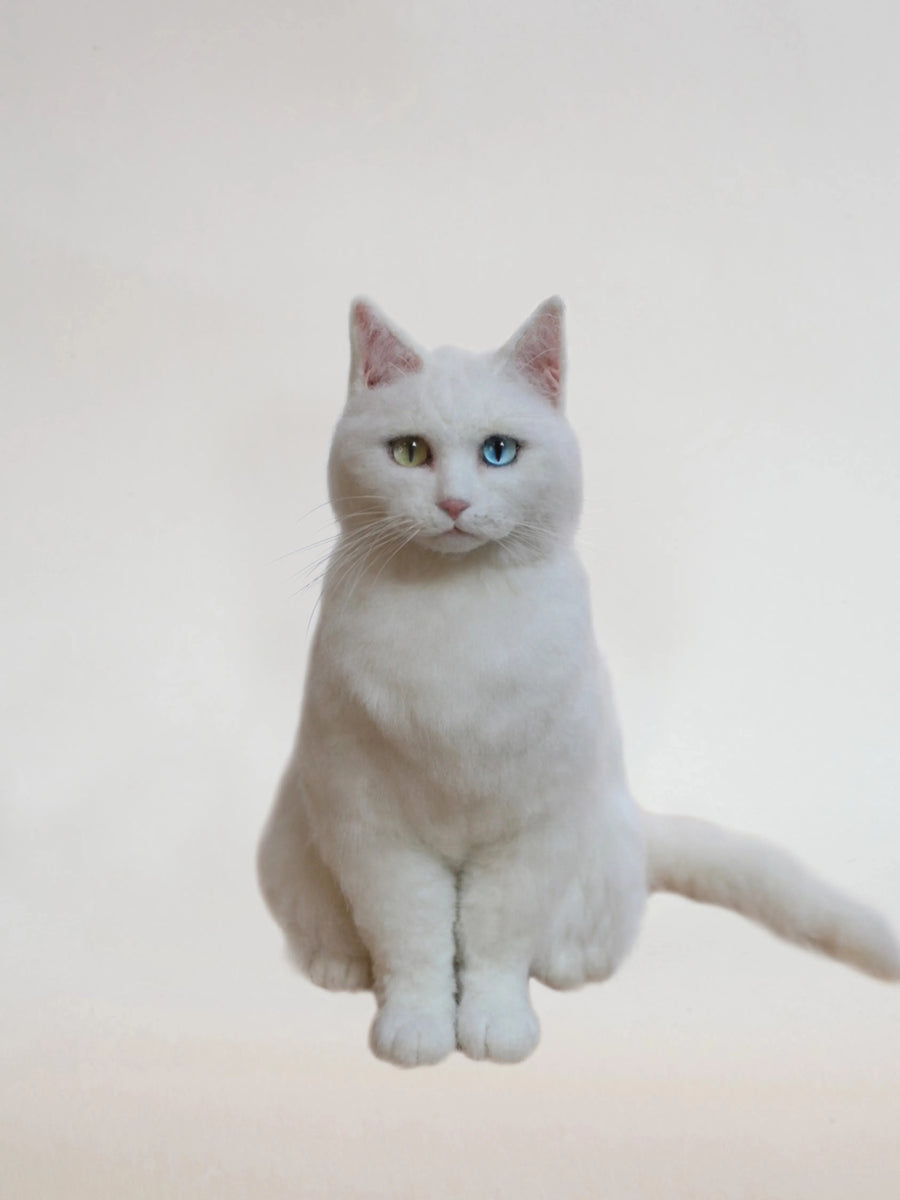
Best for preserving the pet’s complete physical presence
A full-body wool portrait is the strongest choice when posture is as important as the face. It can preserve the way a dog sits, the curl of a tail, a cat’s compact loaf position, unusual paw markings, or the overall silhouette that family members remember.
The official listing starts at $499.99 and includes size options from approximately 6–8 inches through 14–16 inches. Because the entire body is recreated, upload clear face, side, coat-color, paw, and tail references whenever possible.
View the Full-Body Wool PortraitYour Before-Order Checklist
Before choosing the product
- Decide whether the finished portrait will be displayed, worn, held, or given as a gift.
- Choose between a face-focused, half-body, or full-body result.
- Measure the intended display space or compare the garment size chart with clothing that already fits.
- Check the current listed production time and leave room for shipping.
Before uploading photos
- Select one primary reference for pose, angle, and expression.
- Add a daylight image if the primary photo does not show accurate coat color.
- Add side or full-body references when markings, paws, or tail position matter.
- Avoid social-media screenshots when the original image file is available.
- Do not crop out ears, paws, tail, or the outer shape needed for the selected format.
Before submitting the customization notes
- Identify the primary photo by number or filename.
- List two or three features that must be preserved.
- Say whether the collar, leash, hand, background, or temporary medical item should be removed.
- Provide the exact spelling of the pet’s name and any memorial wording.
- Explain which image should control color if the photos look different.
Copyable order note:
Please use Photo 1 as the primary reference for the pose, face angle, and expression. The most important details are the slightly folded right ear, amber-brown eyes, narrow white forehead stripe, and dark patch on the left side of the muzzle. Photo 2 shows the most accurate coat color, and Photo 3 shows the white chest marking. Please remove the leash and background. Keep the natural muzzle length and eye size.
Common Mistakes That Make a Handmade Portrait Less Accurate
Uploading several photos without choosing a primary one
Different photos can show different expressions, colors, ages, and proportions. Tell the artist which image should control the final composition.
Using a heavily filtered image for coat color
Phone filters and warm indoor light can turn gray fur brown, white fur yellow, or black fur reddish. Include a neutral daylight reference when color matters.
Prioritizing the background over the face
The eyes, muzzle, ears, markings, and proportions determine recognition. Resolve those details before asking for decorative background changes.
Expecting every detail to transfer equally across materials
A small embroidered portrait cannot reproduce the same amount of fine texture as a larger painting or wool sculpture. Judge the result according to the selected medium and size.
Waiting until the preview to mention an important feature
If one ear always folds, the dog had a distinctive white paw, or the collar should be removed, include that information in the original brief.
Approving the preview without comparing it with the source
View the preview and primary reference side by side. Zoom in and check proportions, eyes, markings, and coat color before approving.
Treating production time as the delivery date
Handmade production, preview responses, revisions, packaging, and transit are separate stages. Order early when the portrait is needed for a fixed event.
Frequently Asked Questions
Are PetDecorArt pet portraits actually handmade?
PetDecorArt states that its custom portraits are created by real artists rather than generated through automated filters or mass-production templates. The method depends on the product and may involve needle felting, hand painting, or hand embroidery.
What is the best photo for a handmade pet portrait?
Use a sharp, well-lit image with visible eyes, clear face shape, accurate markings, and a natural expression. For full-body work, make sure the paws, tail, and body are not cropped out.
How many photos should I upload?
Start with one strong primary photo. Add supporting photos only when they provide useful information about coat color, side markings, paws, tail position, posture, or accessories. Clearly explain the purpose of each image.
Can PetDecorArt work from an old or imperfect photo?
An older photo may still work when the pet’s eyes, face shape, and markings are readable. If the main image is blurry, dark, or cropped, upload additional references that clarify the missing details. Contact PetDecorArt before ordering if the available photos are severely limited.
Can different photos be combined?
Supporting photos can provide details that are missing from the primary image. For the clearest result, choose one image to control the pose and expression, then specify which details should be taken from the other photos.
Will I receive a preview before the portrait is shipped?
PetDecorArt’s official process states that progress or finished-piece photos are provided for feedback and approval. Reasonable adjustments can be requested before final delivery.
How long does PetDecorArt take to make a portrait?
Most handmade pieces are listed at approximately two to four weeks, depending on complexity, revisions, and the current queue. Larger oil or 3D glass work may require up to six weeks, while the hand-embroidered T-shirt lists approximately 15–30 days of production time. Shipping time is additional.
Can a portrait include more than one pet?
Some PetDecorArt products support multiple pets or additional customization. Check the options on the selected product page and provide a clear reference for each animal. If the pets were photographed separately, explain the intended arrangement before production.
Can real pet fur or whiskers be included?
The framed needle-felted portrait listing states that real whiskers or fur can be included. Contact PetDecorArt before placing the order to confirm suitability and obtain current instructions.
Which format creates the most lifelike result?
A full-body needle-felted portrait provides the strongest physical depth and presence. A framed wool portrait emphasizes facial texture and expression, while hand-painted work offers detailed color and a traditional composition. The most suitable format depends on which parts of the pet you most want to preserve.
Can PetDecorArt create portraits of animals other than dogs and cats?
Yes. PetDecorArt also features custom work for animals such as birds, hamsters, and ferrets. Check the relevant product page or contact support when the animal requires a less common body shape or material treatment.
Ready to Turn Your Pet’s Photo Into Handmade Art?
Start by deciding where the finished portrait will live. Then choose one clear primary photo, collect any supporting references, and write down the two or three details that make your pet unmistakable.
Compare Pet Portrait Styles View PetDecorArt Products Read the Complete Ordering GuideProduct prices, size options, production estimates, materials, and availability were reviewed on July 13, 2026. Confirm the current product page and selected variants before ordering.


